


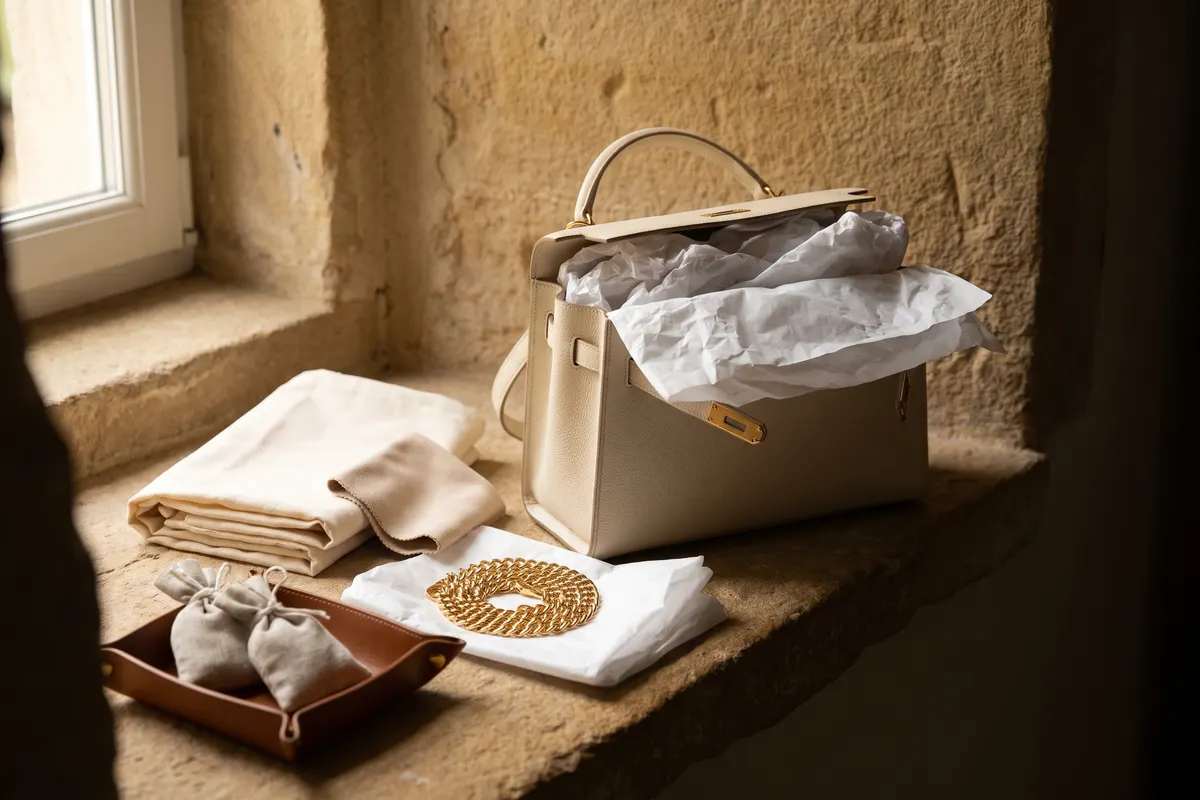
To keep a bag in shape, fill it lightly with acid-free tissue, stand it upright in its cotton dust bag, and keep it somewhere dark, dry and comfortably cool, with space around it so nothing presses against it or transfers colour. That is the short answer to how to store designer bags. Wipe the hardware before it goes away, and take every bag out twice a year to check on it.
Each of those steps exists for a reason, and the reasons matter, because the most common storage mistakes are made by people who are trying hard to do the right thing.
Why careful owners still damage their bags
Ask a repair workshop what they see most and the answer is rarely damage from use. It is collapse, mildew, transferred dye and tarnished hardware, all of which happen to bags that were being looked after. The intention was right and the method was wrong.
A bag sealed in a plastic box to keep it safe cannot breathe. A bag hung from a hook to save shelf space slowly stretches its strap. A bag stuffed with newspaper picks up ink on its lining. A bag kept in its original box in the loft spends every summer far too warm and every winter far too damp. None of these owners was careless, which is exactly why good designer bag storage is worth learning properly.
How to store designer bags: the five rules
1. Give the bag a shape to hold
Leather takes a set. A structured bag left empty on a shelf slowly folds into whatever position gravity chose for it, and once a crease has sat in the same place for a year it does not fully come out. Fill the body loosely with acid-free tissue or a soft pillow insert, enough to hold the silhouette and no more. Overstuffing stretches the panels and pulls at the seams, which is its own kind of damage.
Newspaper is the classic mistake. The ink transfers, especially in humid air, and it transfers onto the lining, where you will not see it until it has set. Coloured tissue carries the same risk on pale interiors.
2. Stand it upright, never hang it
Bags should rest on their base, not hang by their straps. A leather or chain strap carrying the weight of the bag for a year will stretch, and on a chain bag the leather threaded through the links wears at every contact point. Lay the strap or chain inside the bag, on a layer of tissue, so it neither hangs over the edge nor presses into the front panel.
3. Use the dust bag, never plastic
A cotton dust bag protects from light and dust while letting air move, which is exactly what leather needs and exactly what plastic prevents. Trapped moisture is how mildew starts, and a bag sealed in plastic can develop it in a single damp season. If the original dust bag is lost, a plain undyed cotton or linen pillowcase does the same job. Avoid felt and synthetic covers that hold moisture or shed fibres.
4. Give each bag its own space
Keep pieces from touching, particularly a dark bag against a pale one, because dye transfer is permanent. Patent leather can stick to other patent pieces and to plastic when it is warm, so it needs the most space of all. Never stack bags. Even a light bag resting on top of another leaves a dent in the quilting or the flap.
5. Control the air, not just the shelf
Leather is comfortable in the same conditions people are: moderate temperature, moderate humidity and no direct sunlight. Direct sun fades leather unevenly and yellows the untreated edges of light-coloured pieces, which is one of the few kinds of damage no workshop can reverse. Silica gel sachets help in a damp climate, provided they are replaced or dried out a few times a year rather than left in forever.
Where to keep them at home
The best place is usually the least glamorous one: an interior wardrobe in a room you actually live in, where the temperature is steady and the air moves. The two worst places in most homes are the loft and any cupboard on an exterior wall, closely followed by anywhere next to a bathroom, a radiator or a kitchen.
Climate matters too. In a damp northern European or Canadian winter, the risk is mildew, so airflow and silica gel come first. In the Gulf, or in any heavily air-conditioned home, the risk runs the other way: very dry air can make leather stiff and cause fine cracks in glazed edges and exotic skins, so keep bags away from the direct path of an air-conditioning vent. A small hygrometer in the wardrobe tells you which problem you have.
Open shelving with vertical dividers works well, because each bag stands alone and you can see it. Glass display cabinets look beautiful, but choose one out of direct sun, with some ventilation, and do not use the internal lights for hours at a time, since they add both heat and light.
How to store leather bags by material
The rules above apply to every bag, but each material has its own weak point. Knowing how to store leather bags of different finishes is where good care turns into expert care.
| Material | Main risk in storage | What to do |
|---|---|---|
| Grained calfskin (Togo, Epsom, caviar) | Slow loss of shape if left empty | Light tissue stuffing, upright, dust bag |
| Lambskin | Dents, creases, quilting going flat | Generous space, no pressure on the panels, chain laid inside |
| Patent | Colour transfer and sticking | Its own dust bag, never touching plastic or other patent |
| Exotic skins | Drying out, lifting or cracking scales | Stable humidity, away from vents and heat |
| Untreated vachetta trim | Water spots and uneven darkening | Dry hands, no sun, wrap handles in tissue |
| Suede and nubuck | Dust, crushed nap, fading | Dust bag always, soft brush before storing |
| Canvas, nylon, raffia | Dust, crushing, mildew on natural fibres | Keep dry, stuff to shape, check for damp |
The details only a specialist notices
General advice on how to store designer bags gets you most of the way. The last stretch comes down to the specific bag in front of you.
Bags with locks, keys and clochettes
On a Birkin or a Kelly, the padlock, keys and leather clochette are heavier than they look. Left resting against the front of the bag for months, they press a dent into the leather. Wrap them in tissue or a small cotton pouch and lay them beside the bag, not on it. A new Birkin 30 in black Togo arrives with exactly these pieces, and they deserve the same care as the bag itself. If you are still choosing a size, our Birkin sizes guide also shows how much shelf space each one needs.
Chain bags and quilting
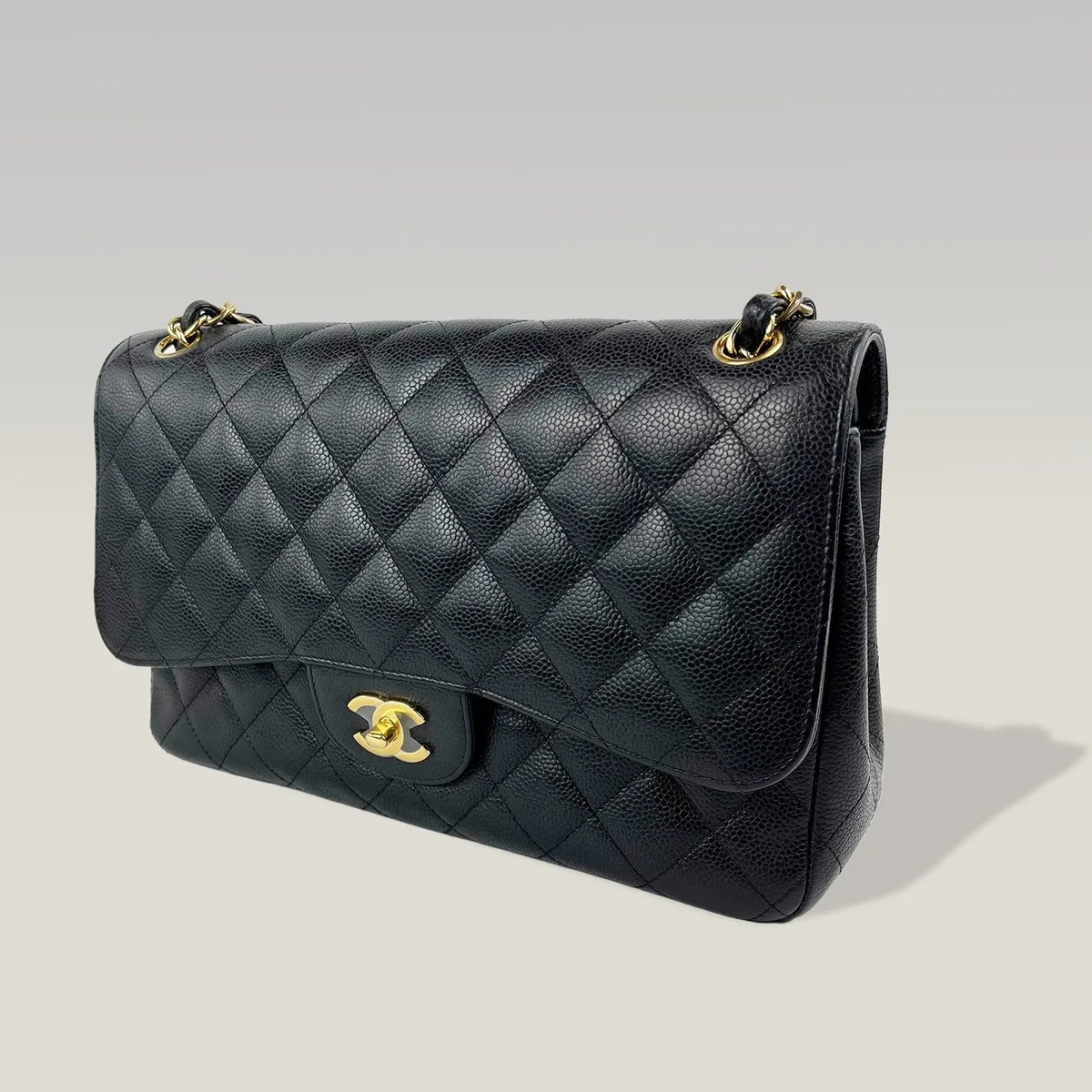
Quilted lambskin holds its puff only if nothing flattens it. On a bag like this pre-owned Chanel Jumbo in black lambskin, coil the chain inside the bag rather than draping it across the flap, where the links can leave a faint ladder of marks.
Charms, tassels and mirrors
Dangling details scratch the leather they rest against. Wrap the metal letter charms of a pre-owned Lady Dior Small in a twist of tissue. On a pre-owned Balenciaga City, lay the leather tassels flat so they do not kink, and keep the small mirror in its own pocket so it never presses against the panel.
Soft and folding shapes
Some bags are designed to fold, and the Loewe Puzzle is a good example. Folding is fine for a journey. For months on a shelf, fill it to its natural shape so the folds do not become permanent lines.
Hardware, handbag care and the rotation habit
Plated hardware tarnishes from skin oils and from still, damp air. Wipe clasps, feet and chains with a dry, soft cloth before the bag goes away. Never use silver polish on plating: it removes the plating along with the tarnish.
Good handbag care is mostly restraint. Wipe leather with a dry microfibre cloth after use, and condition only when the leather actually feels dry, using a product suited to that leather and testing it on a hidden spot first. Avoid household cleaners, baby wipes and anything with alcohol, which strip the finish. Grained leathers and caviar rarely need conditioning at all.
Then take everything out and look at it twice a year. Rotation is not sentimental. It is how you catch a developing problem, a musty smell, a sticky patch on patent, a first spot of tarnish, while it is still a five-minute fix rather than a workshop invoice. It is also the moment to carry a bag you have neglected, because leather that is used and looked after ages better than leather that is never touched.
Why storage protects value
Condition is the biggest single factor in what a bag is worth later, and storage decides condition more than use does. That is why the habits here sit at the centre of our guide to designer bags that hold their value. Keep the box, the receipt and the accessories together in the same dry place: a complete set sells more easily.
The same knowledge helps when you are buying. A musty smell, a crushed shape or a collapsed base on a pre-owned bag tells you how it lived, and our guide on how to buy a pre-owned designer bag explains how to read those signs. A strong chemical smell is a different matter, and it is one of the warning signs covered in our guide on how to spot fake designer bags.
Shop the look
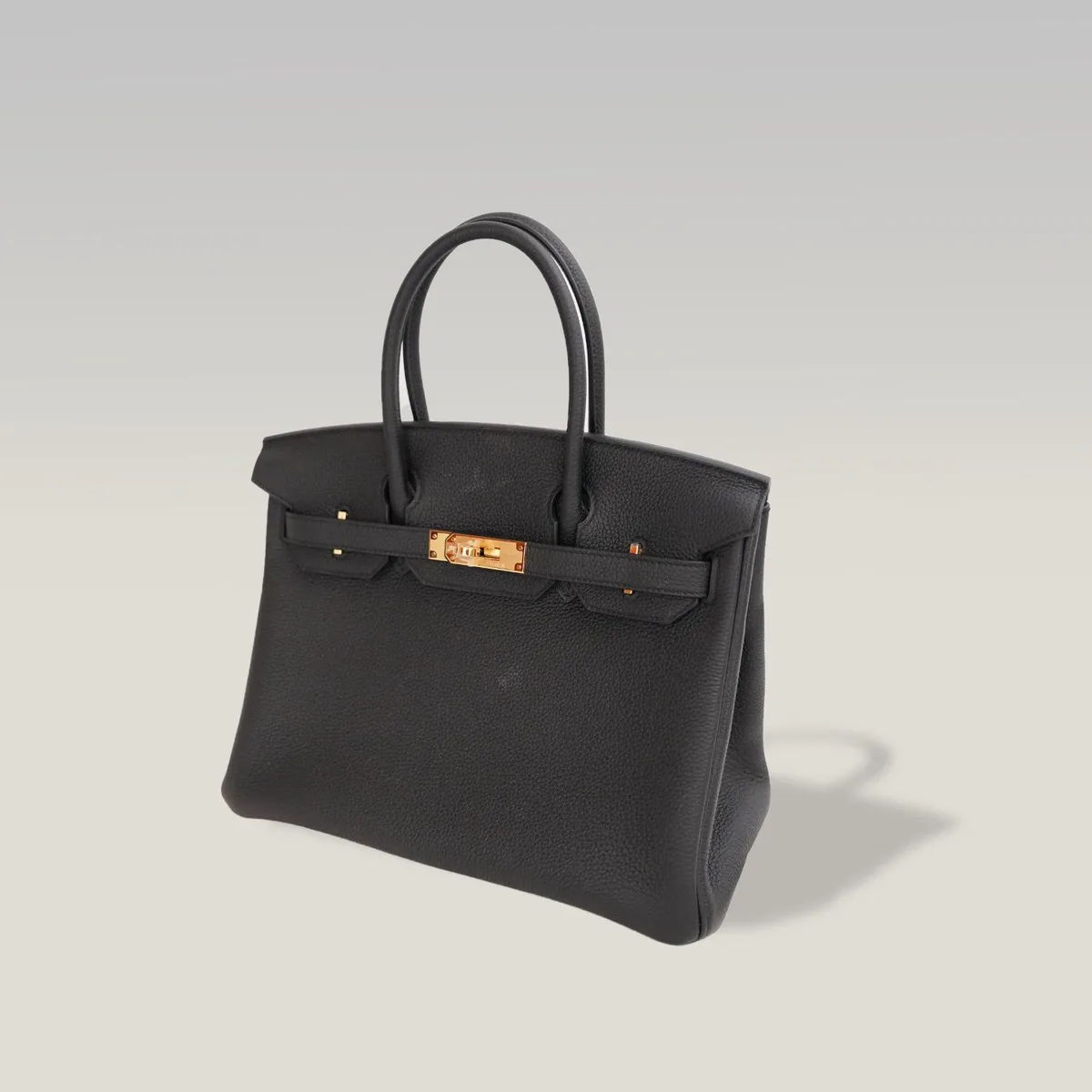 Hermès Birkin 30 in Noir Togo Leather with Gold Hardware
- Chanel Classic Flap Jumbo 30 in Black Lambskin with Gold Chain
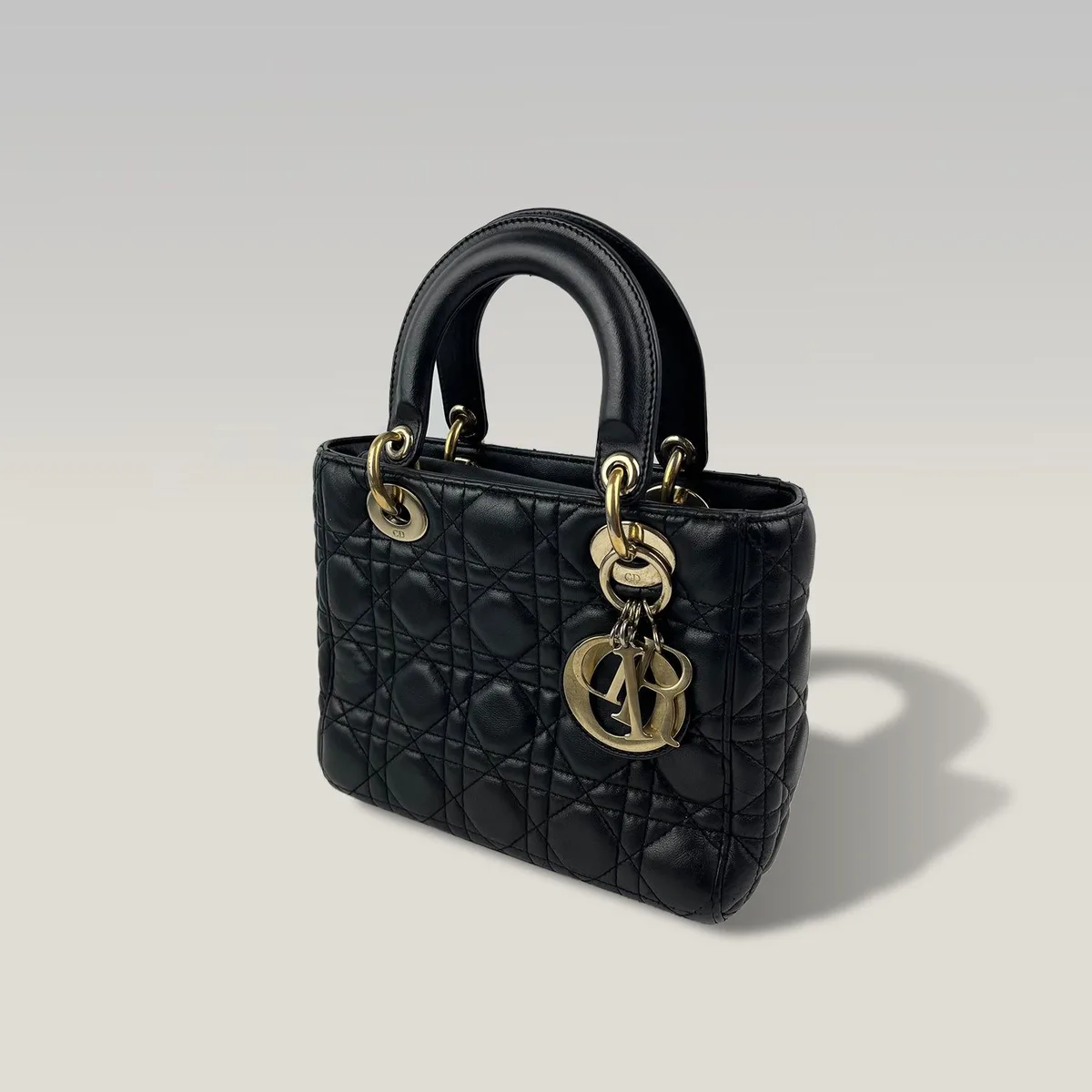 Dior Lady Dior Small in Black Cannage Lambskin with Gold-Tone Hardware and D.I.O.R. Charms
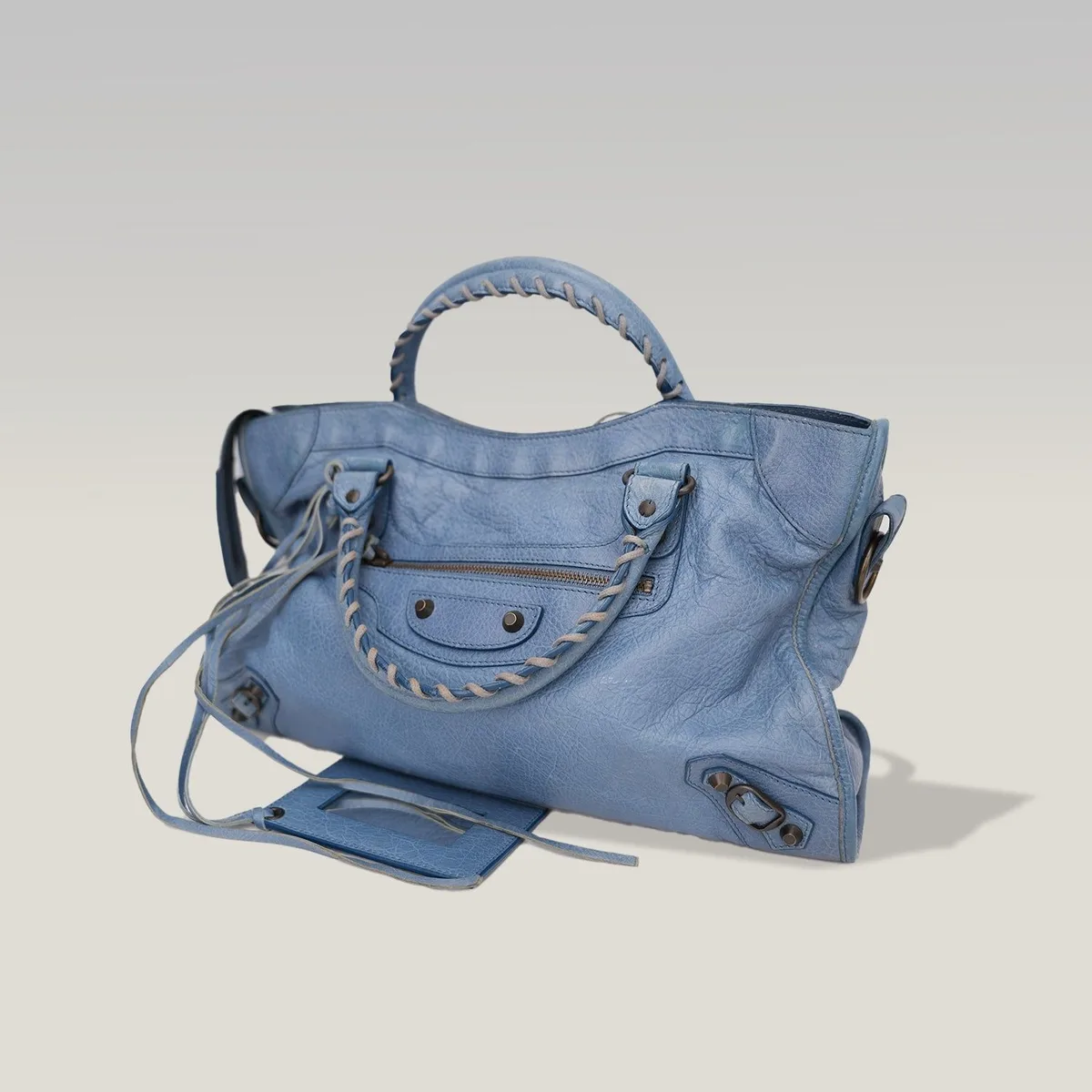 Balenciaga Classic City Shoulder Bag in Blue Leather with Mirror and Strap
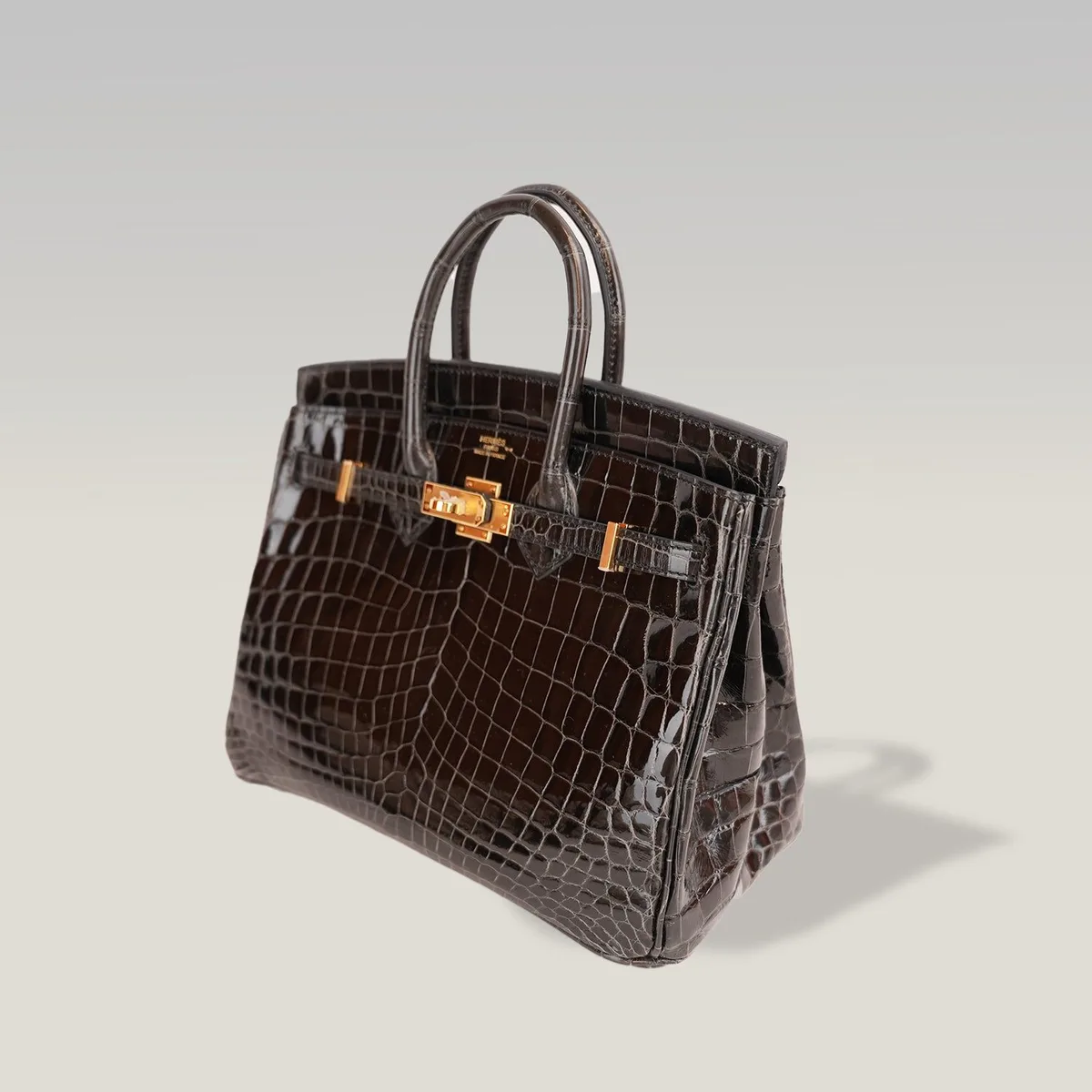 Hermès Birkin 25 Vintage in Graphite Grey Shiny Crocodile with Gold Hardware
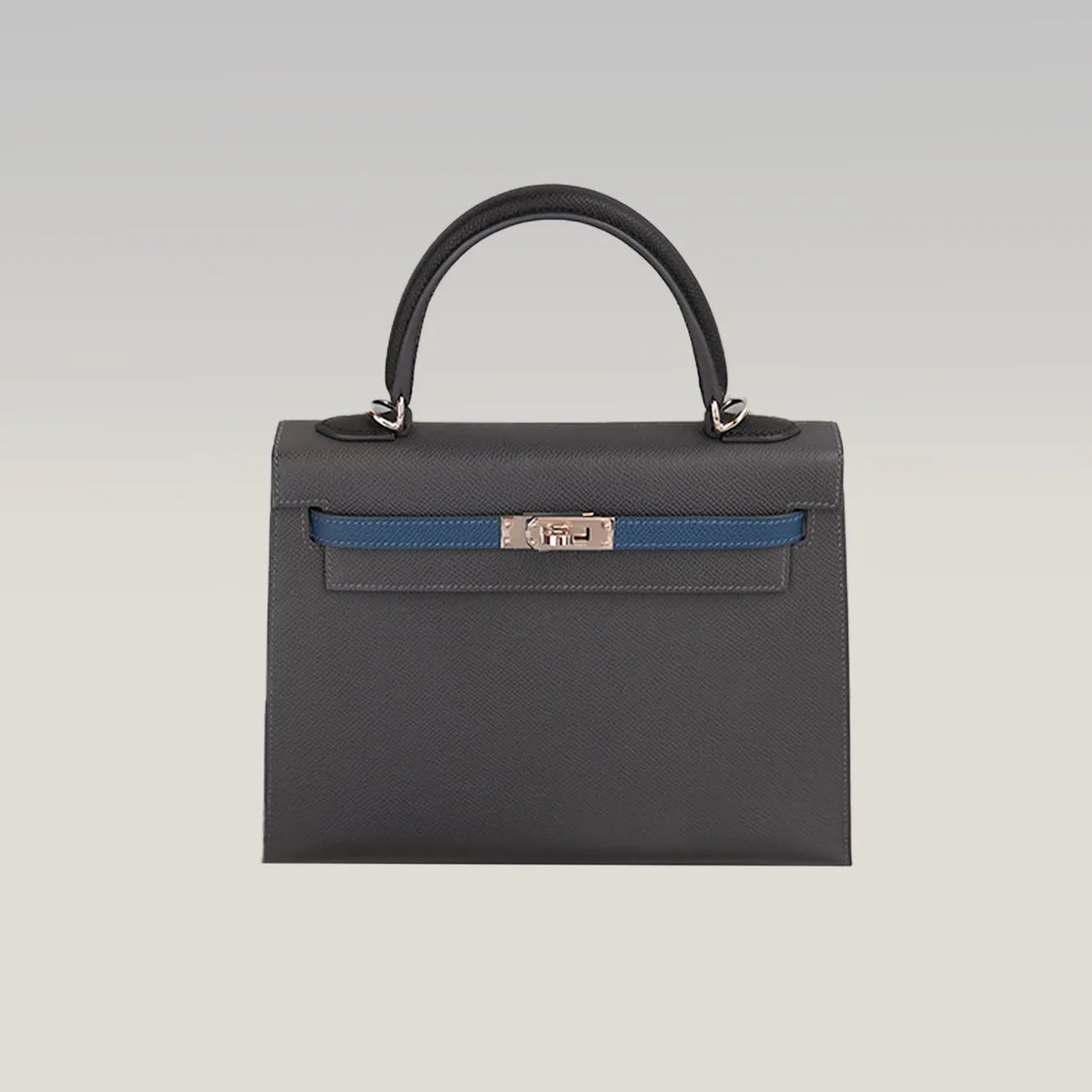 Hermès Kelly 25 Sellier in Smoke Grey and Blue Epsom Leather with Palladium Hardware
Frequently asked questions
Should I keep my handbag in its dust bag?
Yes. A cotton dust bag shields the leather from light, dust and scratches while letting air circulate. Make sure the bag is clean and dry before it goes in.
Can I store a designer bag in a plastic box or bag?
It is best avoided. Plastic traps moisture, which can lead to mildew, and patent leather can stick to it in warm weather. If you use a storage box, choose one that breathes and keep the bag in its cotton dust bag inside it.
Is it bad to hang a handbag on a hook?
For short periods it does little harm, but long-term hanging stretches straps and handles and strains the points where they join the bag. Stand bags upright on a shelf instead.
What should I stuff a designer bag with?
Acid-free white tissue paper or a purpose-made pillow insert. Fill it just enough to hold the shape. Avoid newspaper, coloured paper and anything heavy.
How do I store a bag with a chain strap?
Lay the chain inside the bag on a layer of tissue so it does not hang, stretch the leather woven through the links, or mark the front of the flap.
Now that you know how to store designer bags well, you can choose your next piece with confidence. Browse our totes and top handle bags or the Chanel collection, and give it a good home from the first day.


