


Designer bags that hold their value share a short list of traits: a classic silhouette the house never stops making, controlled supply, regular boutique price rises, and a neutral colour in a hard-wearing leather. In practice that means the Hermès Birkin and Kelly first, the Chanel Classic Flap close behind, and a handful of canvas and leather classics after that. Almost everything else loses value the moment it leaves the boutique.
That is not a pessimistic view. It is simply the starting point for buying well. This guide sets out what the resale market rewards, what it punishes, how the two big houses compare model by model, and how to choose and look after a bag so that it keeps as much of its value as possible.
Most bags depreciate, a few do not
Almost every article on this subject makes the same two claims: that designer bags are an investment, and that some of them outperform gold. Both are half true, and the missing half is the one that costs people money.
The overwhelming majority of designer handbags behave like a new car. They lose a large share of their price on the first day, then keep sliding as the season that produced them fades from memory. A small, identifiable minority does not, and some of those pieces trade close to, or even above, their boutique price when demand is strong. Knowing which group a bag belongs to before you buy is the whole skill.
The reassuring part is that the minority is predictable. The resale designer bags that perform well today are, with very few exceptions, the same shapes that performed well ten years ago.
What designer bags that hold their value have in common
Four traits do most of the work. A bag with all four is in a strong position. A bag with one or none is a purchase for pleasure, which is a perfectly good reason to buy it, just not a financial one.
Production consistency
A house that makes the same silhouette, in the same leathers, decade after decade, builds a deep secondary market with reliable pricing. Buyers know exactly what they are looking at, sellers know roughly what it is worth, and that shared confidence is itself a form of value. A shape produced for two seasons has no such market, so every sale becomes a negotiation from scratch.
Supply discipline
A bag that is hard to get holds its price because the queue does not disappear when you decide to sell. When the boutique cannot simply hand one over, the secondary market becomes the fastest route to owning one, and buyers pay for that speed.
Regular retail price increases
When a house raises the boutique price of a classic, it lifts the floor under every pre-owned example at the same time. That single mechanism explains most of the headline stories about bags appreciating. It is not magic and it is not a guarantee: it is the brand pulling the whole market up behind it, and it only works for as long as the brand keeps doing it.
Neutral colour and durable leather
Black, beige, navy, tan and grey in a plain finish resell far more easily than a seasonal colour, because the buyer pool is everyone rather than the small group who wanted that exact shade this year. Grained leathers matter for the same reason. Condition is the single largest price variable on the secondary market, and a leather that stays in excellent condition through real use starts every future sale ahead.
Hermès resale value: why the Birkin and Kelly sit apart
If you only remember one thing about Hermès resale value, make it this: among designer bags that hold their value, the Birkin and the Kelly tick all four boxes harder than anything else. The shapes have barely changed in decades, each bag is made by hand by a single artisan, boutique access is famously limited, and the house adjusts its prices regularly. In-demand combinations can sell above their boutique price on the secondary market, something almost no other handbag manages.
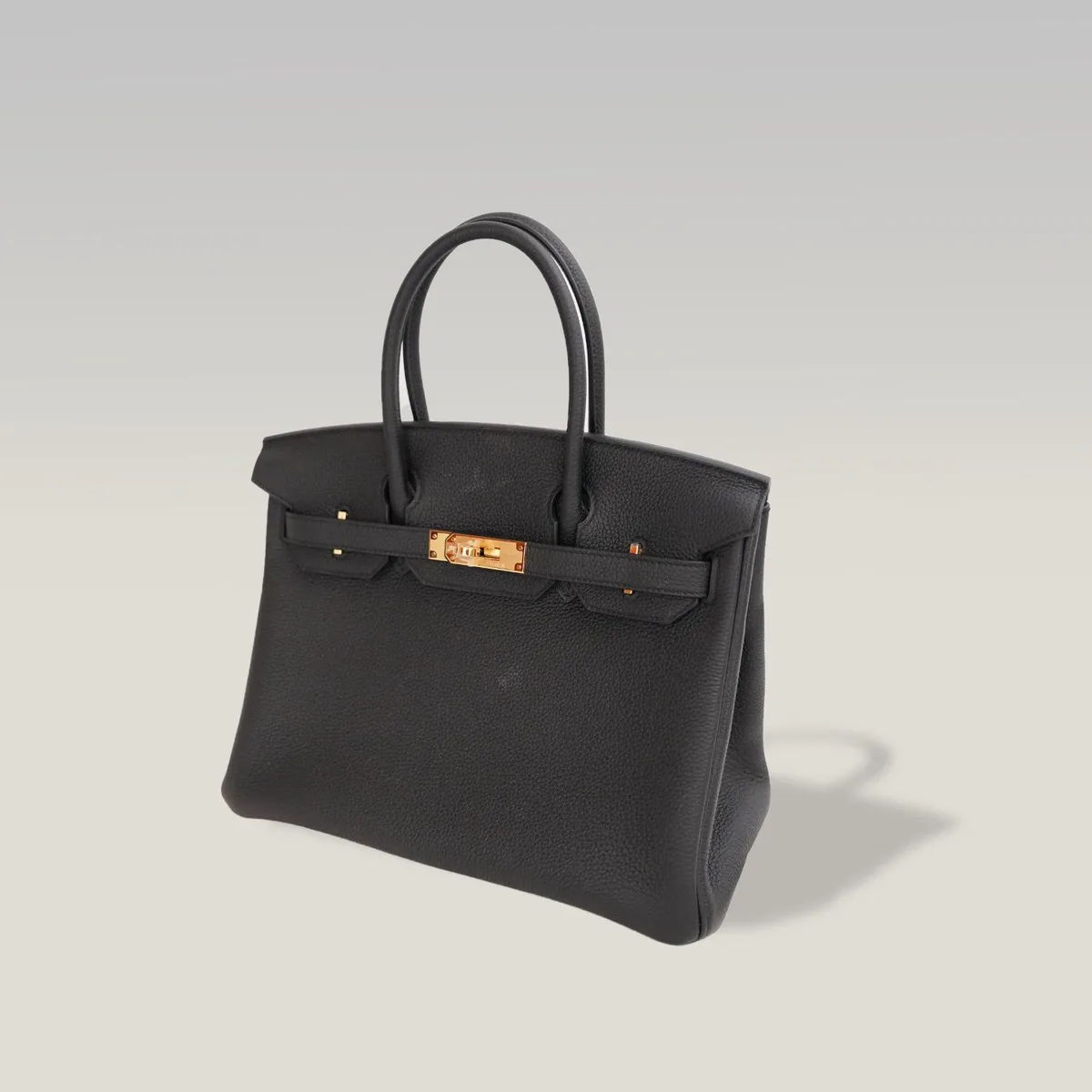
Within the two families, the details move the price. Sizes 25 and 30 are generally the most sought after at the moment, which is worth knowing before you choose, and our guide to Birkin sizes compares how each one carries. Togo and Epsom are the workhorse leathers. Togo is a grained calfskin that resists scratches and relaxes softly over time, while Epsom is embossed, lighter and holds a crisp shape. A new Birkin 30 in black Togo with gold hardware is about as close to a reference point as this market has: black, grained, the most familiar size and the most familiar hardware.
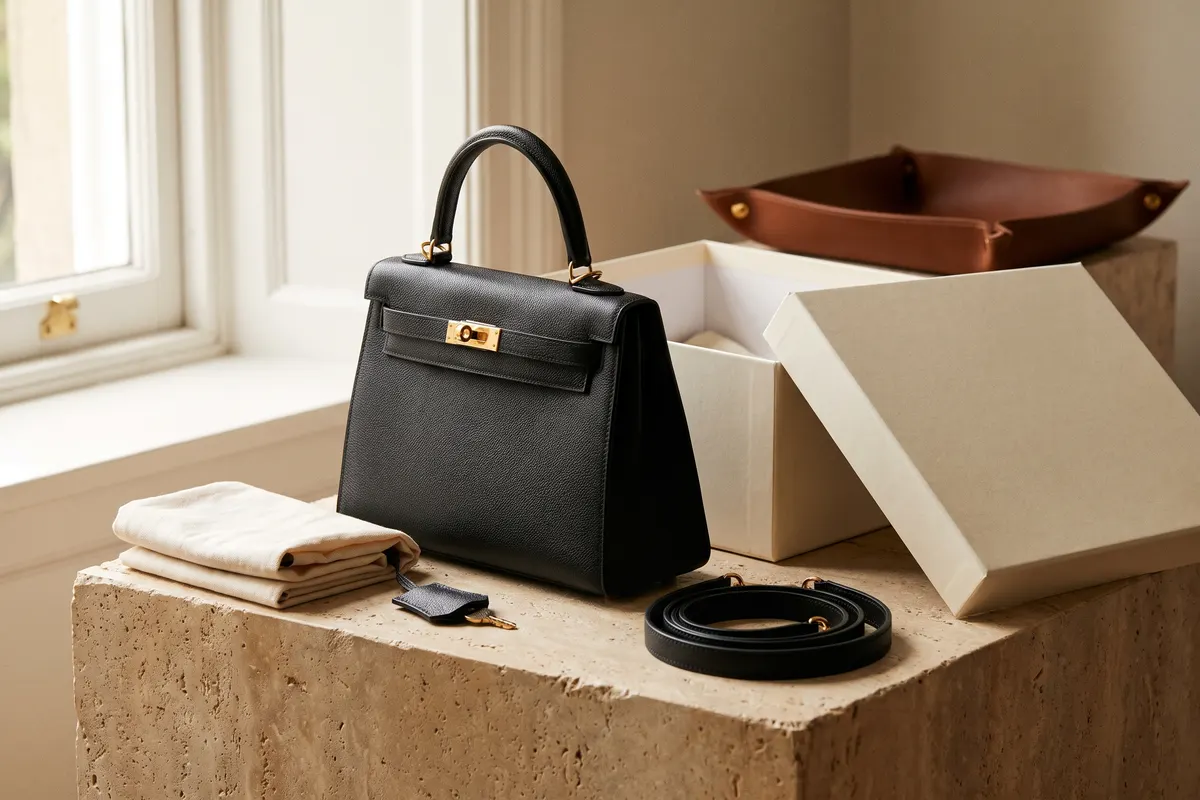
The Kelly behaves in a similar way, with one extra variable. The Sellier version is rigid, with its stitching on the outside, and keeps its architecture for years. The Retourne is stitched inside out and softens with use. Both have loyal buyers, but a Sellier in good condition tends to look newer for longer, which helps when the time comes to sell.
Exotics and the special cases
Exotic skins sit in a market of their own. A pre-owned piece such as this vintage Birkin 25 in graphite grey shiny crocodile is valued for rarity as much as for its shape, and buyers look closely at the scales, the corners and the depth of the gloss. Exotic skins can also need CITES paperwork to cross certain borders, which is worth understanding before you buy one with resale in mind, because it can narrow the pool of future buyers in some countries.
Chanel handbag resale value by model
Chanel is the other house with a deep, liquid secondary market, but it is far less uniform than Hermès. Chanel handbag resale value by model varies widely, and the gap between the best and the weakest performers is wider than most buyers expect. The pattern follows the same four traits: the more permanent and the more neutral the piece, the better it holds.
| Model | How it tends to hold value | What buyers check first |
|---|---|---|
| Classic Flap, Medium and Jumbo | The strongest of the range, with steady demand and repeated boutique price rises | Corners, quilting that has kept its puff, chain wear |
| Classic Flap, Small and Mini | Strong, with demand that moves with the appetite for smaller bags | Flap shape, scratches on the turn-lock |
| 2.55 Reissue | Solid, with a quieter, more collector-led market | Lock plating, finish of the aged chain |
| Wallet on Chain | Good for its price and a common first step into the house | Corner wear, flap edges, card slots |
| Boy, 19 and Gabrielle | More variable, following fashion cycles | Hardware finish, softening of the leather |
| Seasonal and runway pieces | The least predictable, as they rely on one specific buyer | Completeness, novelty details intact |
Leather matters as much as model. Caviar, Chanel's pebbled calfskin, keeps its corners and resists scratches, which is why a pre-owned Medium Double Flap in black caviar is the bag most resale buyers picture when they think of the house. Lambskin is softer and more luxurious in the hand, but it shows every scuff and loses its crisp quilting sooner, so condition grades fall faster. If you want the smallest way into the house, our comparison of the Wallet on Chain from Chanel, Saint Laurent and Dior explains why it is often a sensible first step.
Beyond Hermès and Chanel: canvas and other classics
The best investment bags are not only the most expensive ones. Louis Vuitton's coated canvas is one of the most resilient materials in luxury: it shrugs off rain and scratches, and the house's core shapes, the Speedy above all, have been made for generations. A pre-owned Neverfull MM in brown monogram canvas finds a buyer quickly because so many people want exactly that bag. What buyers inspect is the untreated vachetta leather on the handles and trim, which darkens to honey with age. An even patina is accepted. Water marks, cracking and dark edges where hands have held it are not.
Collaborations are the exception within the exception. A piece like the Louis Vuitton x Takashi Murakami Speedy 30 has a dedicated collector following, but its value depends on that audience rather than on the broad market, so it behaves more like art than like a staple. The Lady Dior is a quieter performer: a shape the house has kept in its collection since the mid 1990s, recognisable by its cannage stitching and dangling charms, with steady demand in black.
What the market quietly punishes
Heavy branding dates fastest. A bag covered in a logo treatment that defined one season becomes instantly legible as belonging to that season, and the resale price reflects it. Novelty shapes share the problem in a more extreme form.
Fragile finishes are the second trap. Patent, pale suede and untreated lambskin all photograph beautifully and all show wear within months of real use.
The third is incompleteness. A missing dust bag, box, strap or charm rarely stops a sale, but buyers deduct for it, and a bag with a long gap in its history raises more questions than one that arrives with everything it left the boutique with.
The honest framing: use, not profit
Suppose a bag keeps ninety per cent of its value over five years of regular use. That bag has not made you money. It has given you five years of use for very little, which is a far better outcome than almost anything else in a wardrobe manages, and it is the realistic target for designer bags that hold their value. Treat anything above it as a pleasant surprise rather than a plan.
Selling also has costs. Fees, shipping, insurance and the time it takes to find the right buyer all come out of the final figure, so a bag that simply holds its price on paper has usually given up a little in practice.
How to buy with resale in mind
- Choose the classic over the seasonal. If the house has made the shape for a decade, it will very likely still be wanted in another.
- Choose grained leather if you will carry it. Togo, Epsom and caviar forgive daily life. Lambskin and patent do not.
- Stay neutral for your first serious piece. Black, beige, grey and tan widen the pool of future buyers.
- Keep the full set. Dust bag, box, receipt, straps, charms and any care booklet, kept together, reliably add to the final price.
- Look after it properly. Most condition loss happens in the wardrobe, not on the arm, and our guide on how to store designer bags covers the habits that prevent it.
- Buy pre-owned with care. A good pre-owned classic has already taken its steepest drop. Our guide on how to buy a pre-owned designer bag sets out what to inspect, and our Sourcing and Authenticity page explains how we source and inspect our pieces.
Finally, buy the piece you want to use. A bag kept in a wardrobe purely to protect its condition has lost its whole purpose, and the best resale story in the world does not make up for a bag you never enjoyed carrying.
Shop the look
- Hermès Birkin 30 in Noir Togo Leather with Gold Hardware
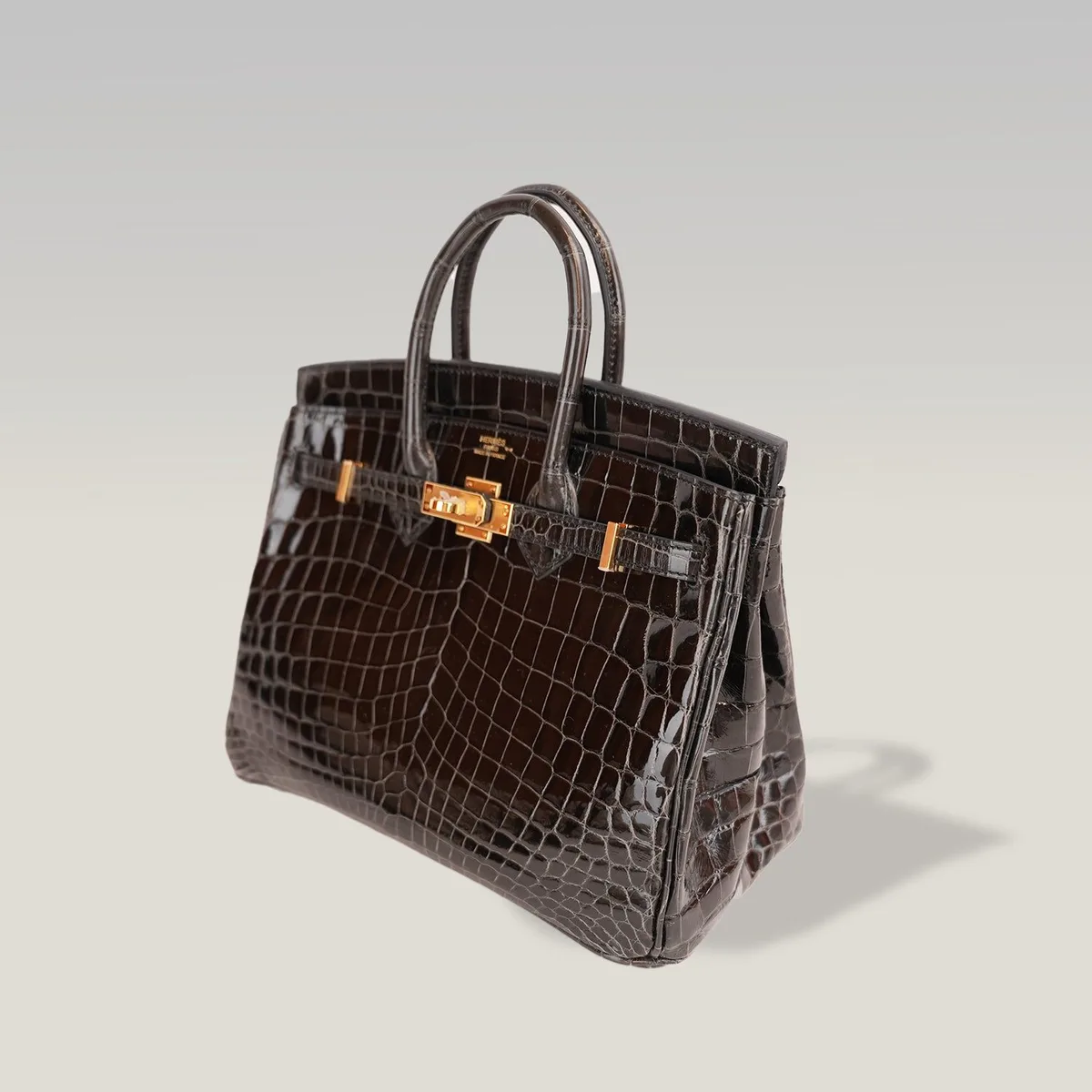 Hermès Birkin 25 Vintage in Graphite Grey Shiny Crocodile with Gold Hardware
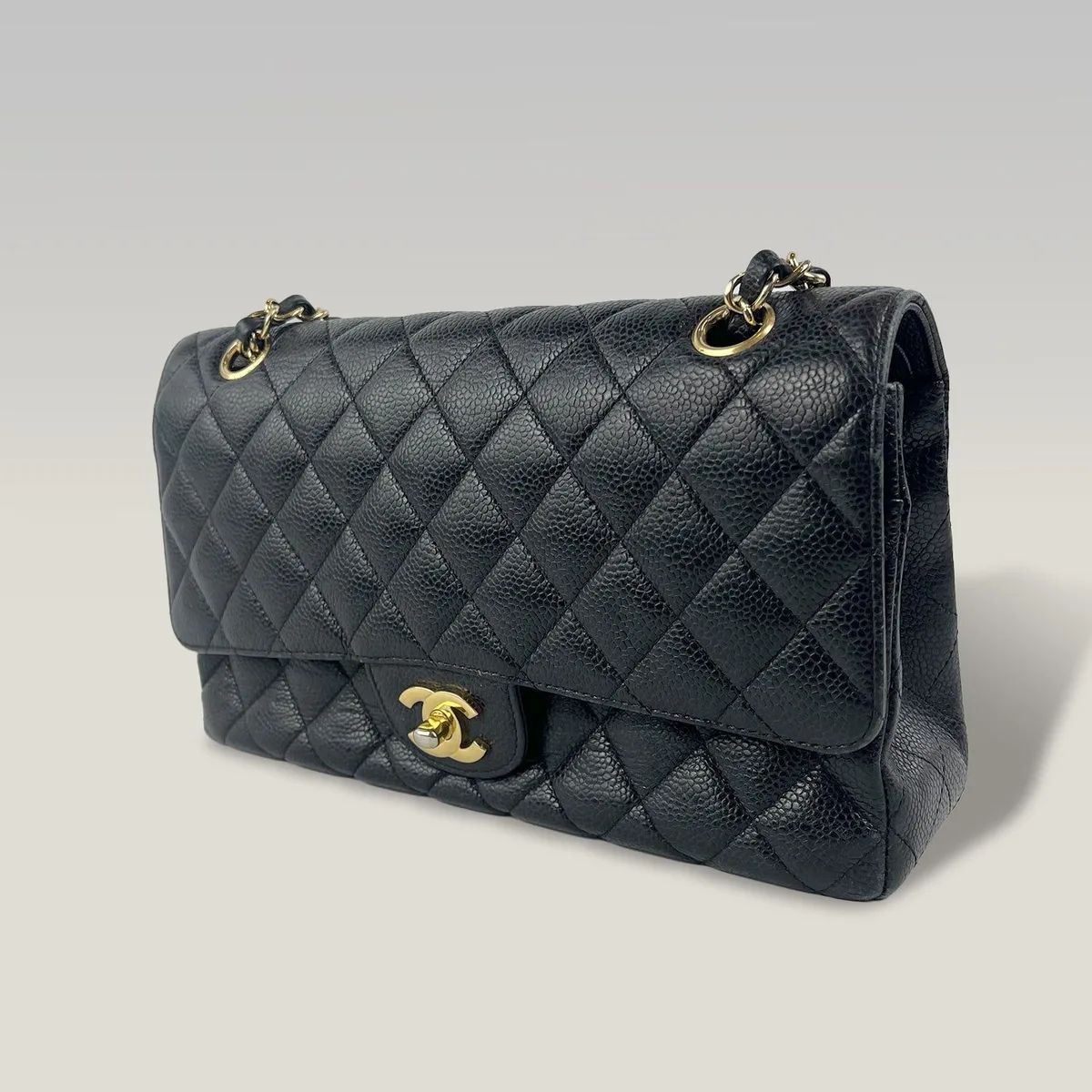 Chanel Classic Medium Double Flap in Black Caviar Leather with Gold-Tone Hardware
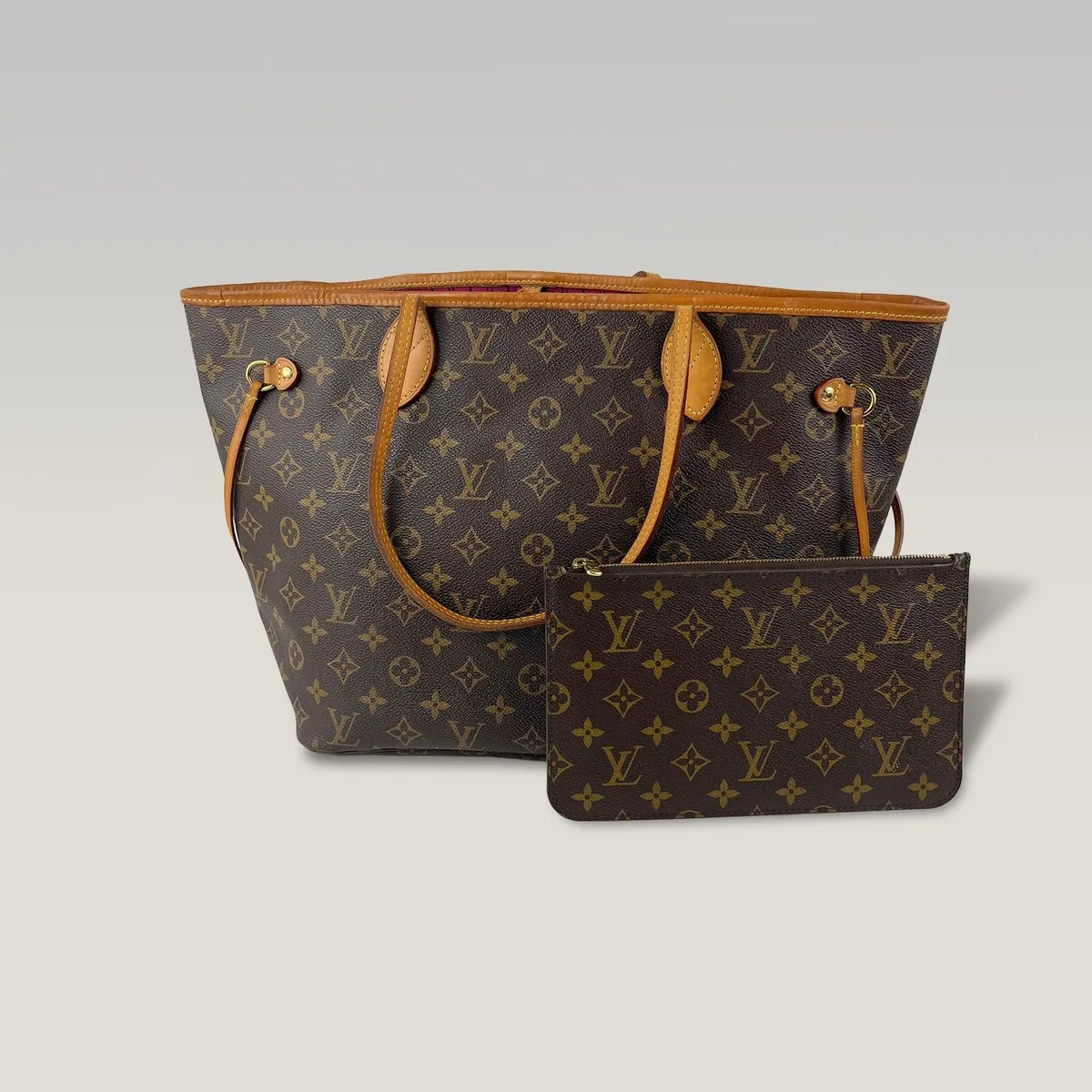 Louis Vuitton Neverfull MM in Brown Monogram Canvas with Orange Interior
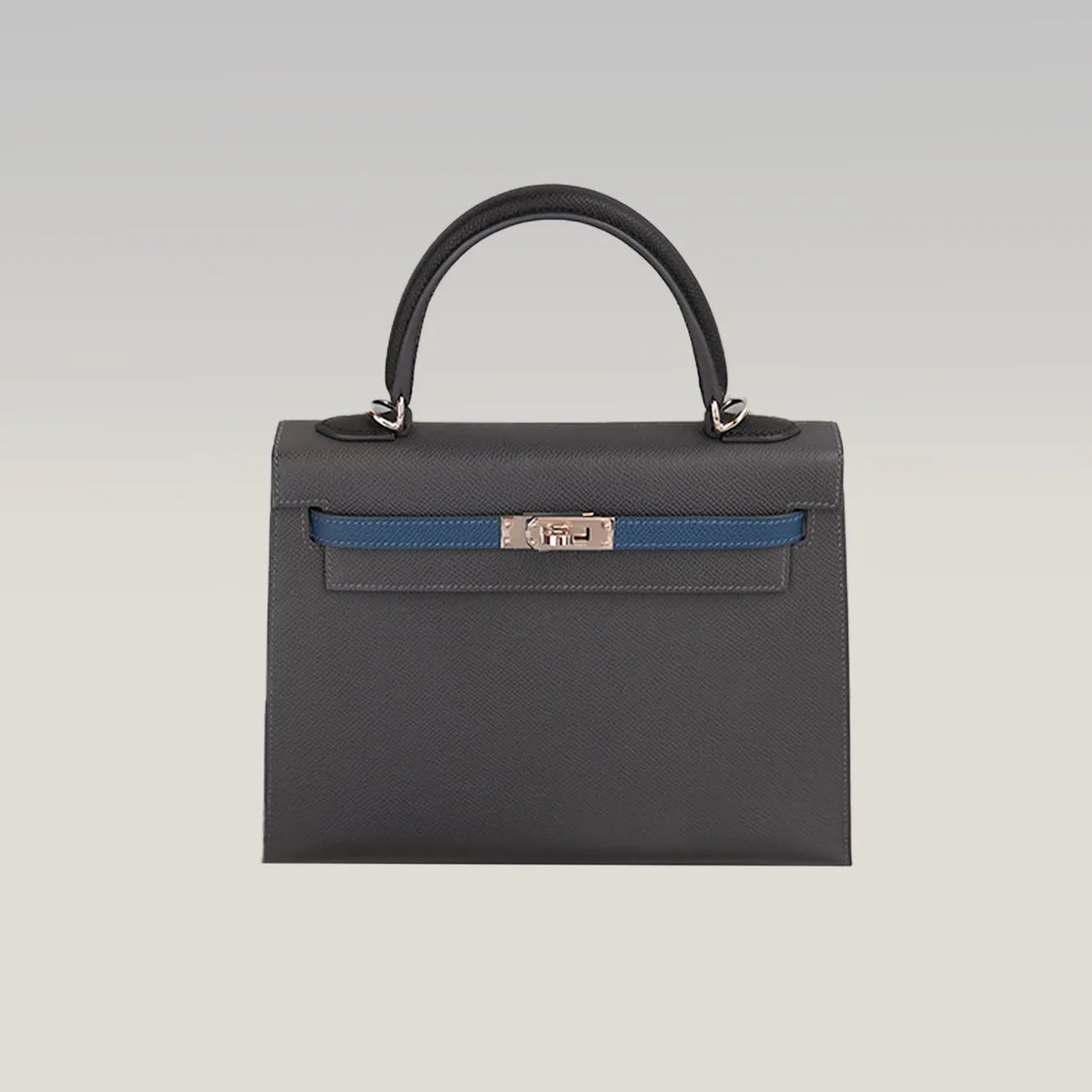 Hermès Kelly 25 Sellier in Smoke Grey and Blue Epsom Leather with Palladium Hardware
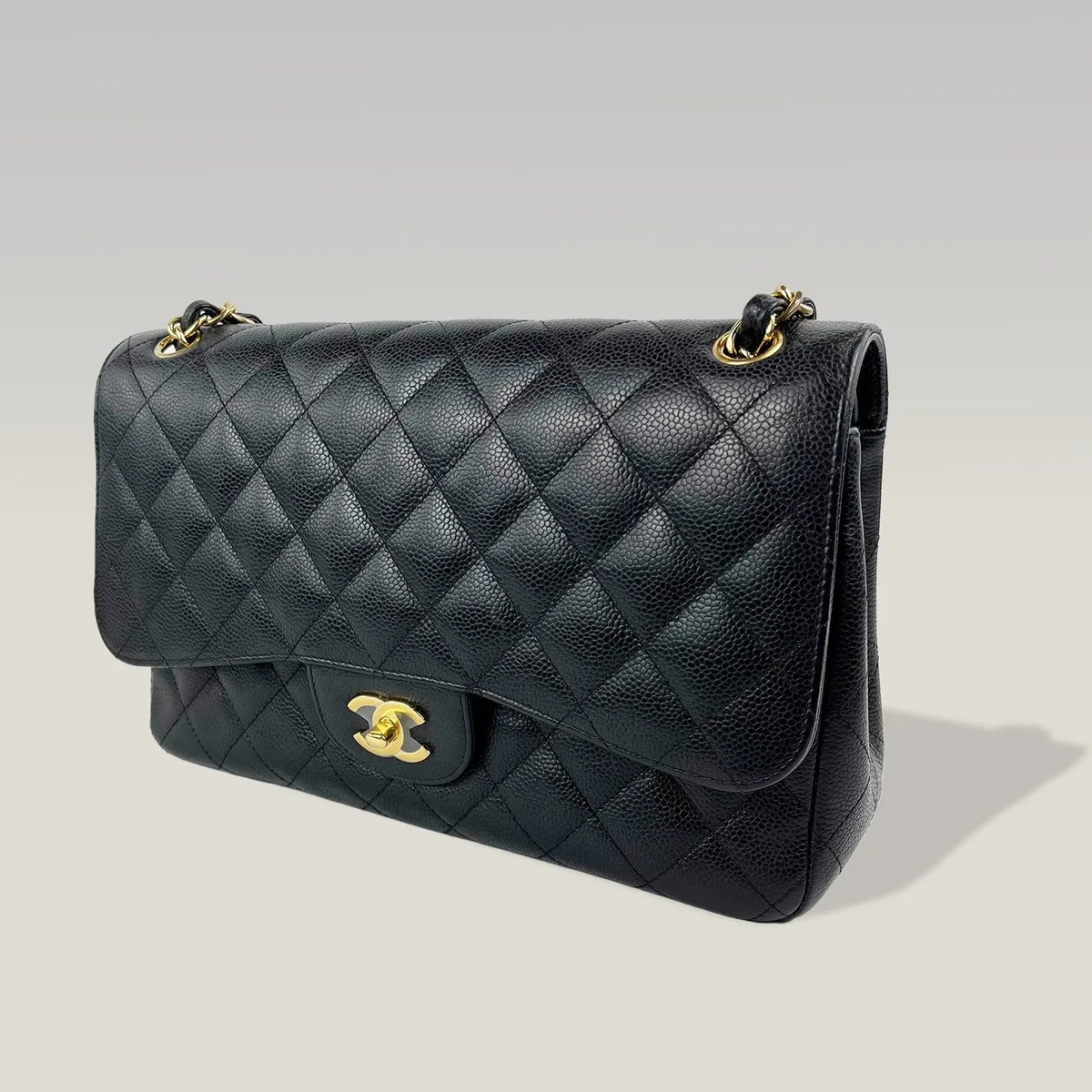 Chanel Classic Flap Jumbo 30 in Black Lambskin with Gold Chain
Frequently asked questions
Do designer bags hold their value?
Most do not. A small group of classics, led by the Hermès Birkin and Kelly and the Chanel Classic Flap, holds its value well, and some combinations can resell above their boutique price. Seasonal and heavily branded pieces usually lose a large share of their price quickly.
Which Chanel bag holds its value best?
The Classic Flap in Medium or Jumbo, in black caviar with gold or silver hardware, is generally the most dependable. Smaller sizes and the Wallet on Chain follow, while seasonal designs are the hardest to predict.
Is a Hermès bag a good investment?
A Birkin or Kelly in a popular size, a neutral colour and a durable leather has held its value better than almost any other bag. It is still best treated as a beautiful object you use, with strong resale as a bonus rather than a promise.
Are pre-owned designer bags a better buy for resale?
For most houses, yes. A pre-owned classic in excellent condition has already absorbed the first and steepest drop in value, so if you sell it later in similar condition you lose far less than you would on a new bag of the same model.
Does colour affect resale value?
Yes. Neutrals such as black, beige, grey and tan sell faster and more reliably because almost every buyer wants them. Bright seasonal colours can do well with the right buyer, but it usually takes longer to find one.
If you are building a collection with longevity in mind, start with the classics. Browse our Hermès bags, the Chanel collection or the vintage and pre-owned edit, where many of the designer bags that hold their value best are waiting for their next owner.


