


A Louis Vuitton date code is a short heat-stamped mix of letters and numbers that tells you where a bag was made and roughly when. From 1990 it is two workshop letters followed by four digits: until 2006 those digits give the month and year, and from 2007 they give the week and year. Around 2021 the house replaced stamped codes with embedded microchips.
That covers most bags you will meet. The earlier formats, the workshop letters, the exceptions and the mistakes people make when reading them are all below.
What a date code is, and what it is not
People often call it a Louis Vuitton serial code or serial number, but that is not quite right. A serial number is unique to one item. A date code is not: many bags made in the same workshop in the same month or week share an identical code. It records production, not identity.
This matters when you are buying. A date code can tell you whether a bag's claimed era, model and country of manufacture fit together. It cannot tell you that a bag is what it claims to be, because a code is easy to copy, and copies of popular models often carry perfectly plausible ones. Treat it as one line in a cross-check, alongside materials, stitching, heat stamp and hardware. Our article on the authentication checks counterfeiters still fail explains why construction tells you far more.
Where to find the date code
The code is heat stamped, usually onto a small leather tab or directly onto leather inside the bag. Common places include:
- a narrow leather tab sewn into an interior seam, near the top of the bag;
- the inside of an interior pocket, sometimes upside down or along its top edge;
- the leather tab that holds a D-ring;
- on small leather goods, inside a card slot or along an interior fold.
On older or well-used bags the stamp can be faint, partly hidden by stitching or rubbed by friction. A small torch held at a low angle across the leather makes a faint impression much easier to read. If you still cannot find one, the bag may simply predate the system or postdate it.
Louis Vuitton date code list by era
The format changed several times, so identify the format first, then read it. The dates of each change are approximate, as the house never published them.
| Era | Format | How to read it | Example |
|---|---|---|---|
| Before the early 1980s | No code | Dated by construction and stamping | None |
| Early 1980s | 3 or 4 digits | First two digits are the year, the rest the month | 836 = June 1983 |
| Mid to late 1980s | 3 or 4 digits, then 2 letters | Year, then month, then workshop | 8610TH = October 1986, France |
| 1990 to 2006 | 2 letters, then 4 digits | 1st and 3rd digits = month; 2nd and 4th digits = year | SP1025 = December 2005 |
| 2007 to about 2021 | 2 letters, then 4 digits | 1st and 3rd digits = week; 2nd and 4th digits = year | AR2178 = week 27 of 2018 |
| About 2021 onwards | No visible code | Embedded microchip | None |
Before the early 1980s: no date code
Dating method: construction, heat stamp and hardware. Bags from this period, including pieces made for the American market under licence with a different maker's stamp, carry no code at all. Their age is read from the stamping style, the lining, the zips and the way the model was built at the time, which takes real specialist knowledge.
Early 1980s: three or four digits
Format: year then month, digits only. The earliest codes are simple: 836 is June 1983, and 8211 is November 1982. They are short and often faint, so a worn 8 can look like a 3 or a 6. When the digits are unclear, the construction and lining tell you more than the stamp.
Mid to late 1980s: digits followed by letters
Format: year, month, then two workshop letters. Later in the decade the workshop was added after the digits, so 8610TH reads as 1986, month 10, workshop TH. This is the format most people mean by an LV vintage date code, and there is more variation in placement and style than in later decades, because the system was still new.
1990 to 2006: letters then month and year
Format: two letters, then four digits, where the 1st and 3rd digits are the month and the 2nd and 4th are the year. Take TH0947. Write out the digits: 0, 9, 4, 7. The first and third give 04, so April. The second and fourth give 97. The bag was made in April 1997 in a French workshop. A useful sanity check: the month can only run from 01 to 12, so a code whose first and third digits make 14 or 31 does not fit the format.
2007 to about 2021: letters then week and year
Format: two letters, then four digits, where the 1st and 3rd digits are the week of the year and the 2nd and 4th are the year. Take SD3109: digits 3, 1, 0, 9. Week 30, year 2019. The check here is that the week runs from 01 to 52, or occasionally 53. A week of 61 is impossible. The most common reading error is treating these codes as month and year, as in the older format.
About 2021 onwards: the microchip
Format: none visible. From around 2021, Louis Vuitton began replacing stamped codes with a microchip embedded in the bag. The chip is designed to be read by the house, not by an owner's phone, so it gives a buyer nothing to check at home. A recent bag without a visible code is therefore normal. During the changeover some pieces may carry either system, so judge bags from that year with care.
Workshop letters and countries
The two letters identify the workshop, and therefore the country. They should agree with the "Made in" line of the heat stamp. A selection of commonly published codes:
| Country | Commonly published workshop letters |
|---|---|
| France | AN, AR, AS, BJ, CT, DU, MI, SP, SR, TH, VI |
| France or USA | FL, SD |
| USA | FC, FH, OS |
| Spain | CA, GI, LB, LO |
| Italy | BO, CE, FO, MA, SA |
| Germany | LP |
| Switzerland | DI, FA |
This list is not exhaustive: workshops opened, closed and changed over the decades. Two codes cause most of the confusion. FL and SD have been used by workshops in both France and the United States, so either "Made in France" or "Made in USA" can be correct with them. Beyond those, a mismatch between the letters and the country stamp is a reason to ask questions.
Cross-checking the code against the bag
This is where a code becomes useful. Ask whether the period it suggests fits the model, the material and the details.
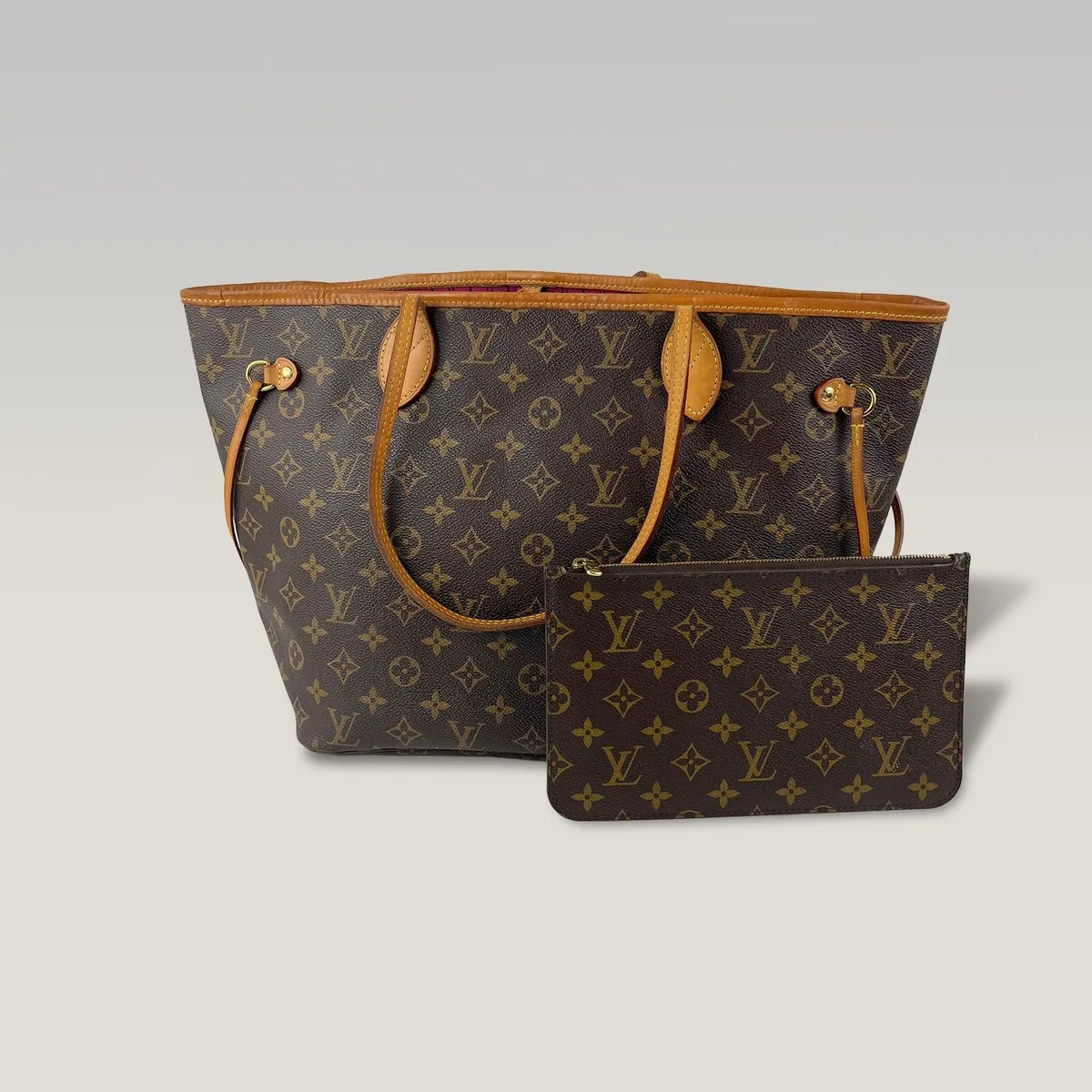
- Model and material launch dates. A Neverfull cannot predate 2007, Damier Azur cannot predate 2006, and the Murakami Monogram Multicolore belongs to roughly 2003 to 2015. A pre-owned Speedy 30 in white Monogram Multicolore should therefore carry a code that falls inside that window.
- Recent shapes. The Pochette Métis arrived in the mid 2010s, so a pre-owned Pochette Métis in Monogram canvas should show a week and year code from then onwards, or no visible code at all if it is recent enough to be chipped.
- Long-running shapes. The Alma has been in the line since the early 1990s, so a pre-owned Alma MM in Monogram canvas can carry a code from any period after that. Here the stamp, hardware and lining do more of the dating work.
- Country. The workshop letters should agree with the "Made in" stamp.
- Stamp quality. The code should be pressed in the same clean typeface and depth as the rest of the stamping, evenly spaced and straight. Wobbly, uneven or overly deep characters deserve a closer look.
Common mistakes when reading a Louis Vuitton date code
- Reading a 2007 to 2021 code as month and year. In that period, the 1st and 3rd digits are a week.
- Assuming every bag has a code. Pieces made before the early 1980s and after about 2021 do not.
- Treating a correct code as proof. Codes are routinely copied.
- Confusing 0 with O, or 1 with I, on a worn stamp. Workshop codes are letters; the date portion is digits.
- Expecting uniqueness. Two bags with identical codes is entirely normal.

How other houses date their bags
Every house has its own system, and each one is read differently. For related reading, Hermès uses a blind-stamped year letter, explained in our Hermès date stamp year chart. Chanel used numbered stickers and matching cards before moving to microchips, as set out in Chanel serial numbers explained. Gucci prints style and supplier codes on a leather tag, covered in how to read a Gucci serial number.
If you are shopping, our guide to buying a pre-owned designer bag puts codes in their proper place among the other checks, and our collector's guide to vintage Louis Vuitton bags covers the classic shapes and how each one ages.
Shop the look
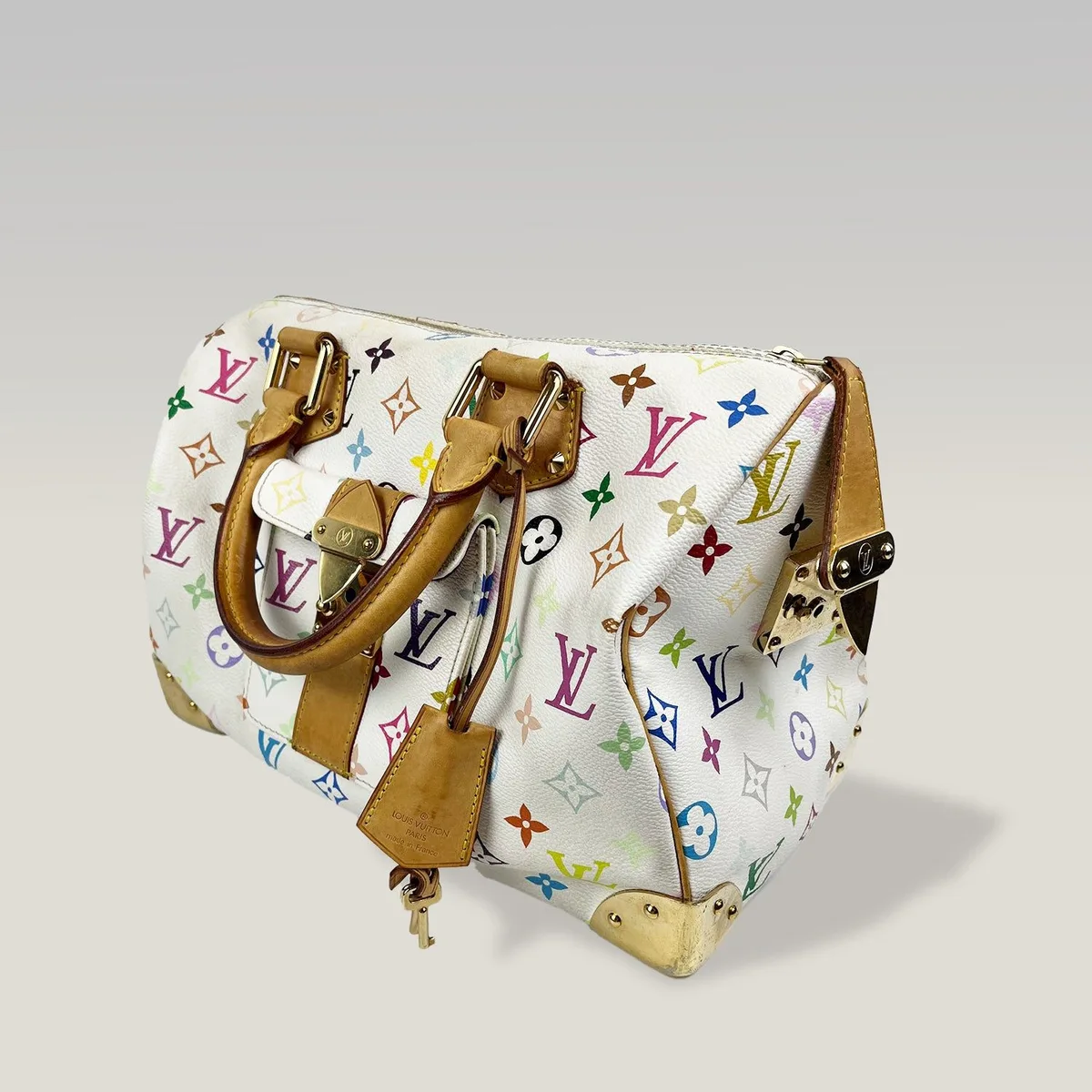 Louis Vuitton x Takashi Murakami Speedy 30 Monogram Multicolore in White
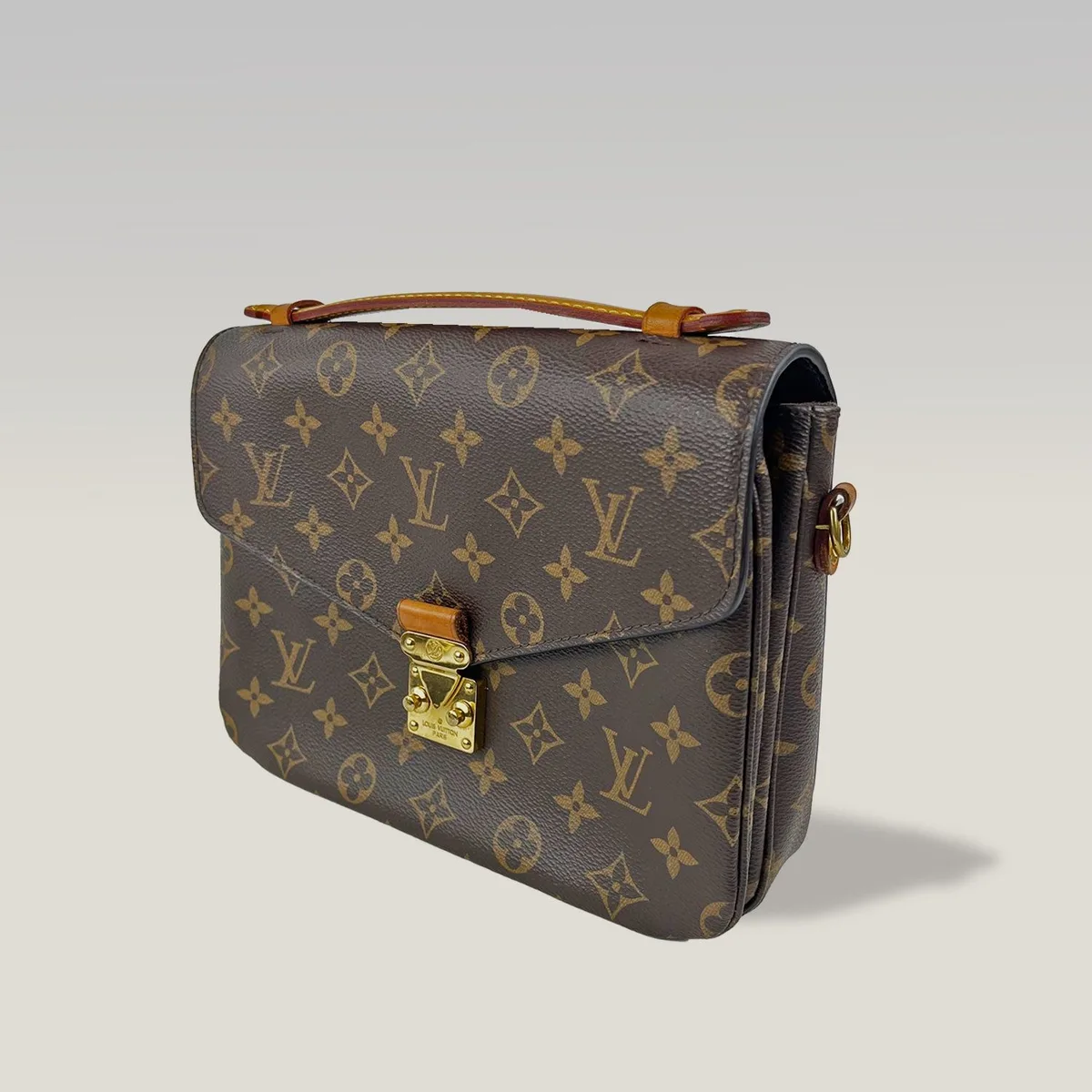 Louis Vuitton Pochette Métis in Brown Monogram Canvas
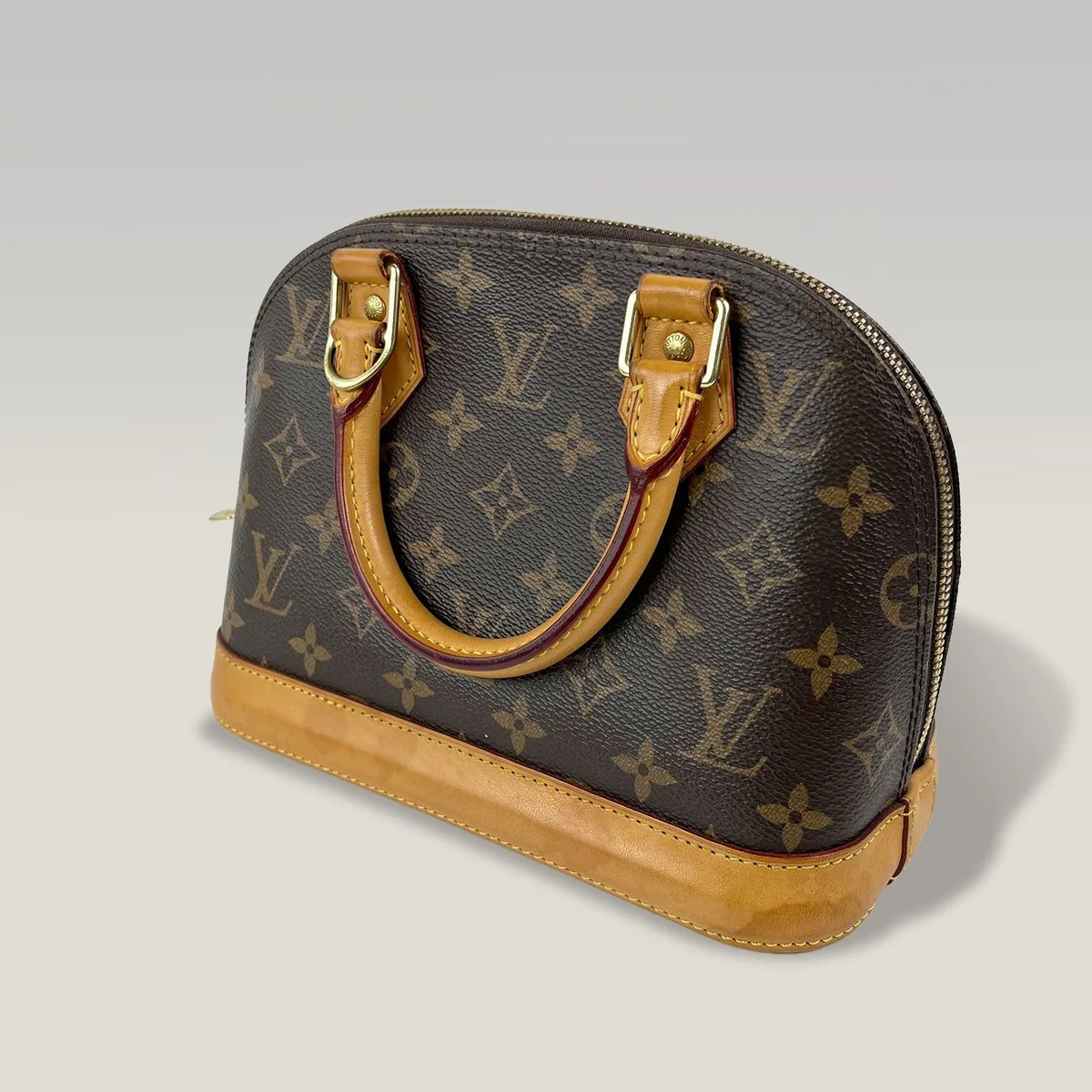 Louis Vuitton Alma MM in Brown Monogram Canvas with Removable Strap
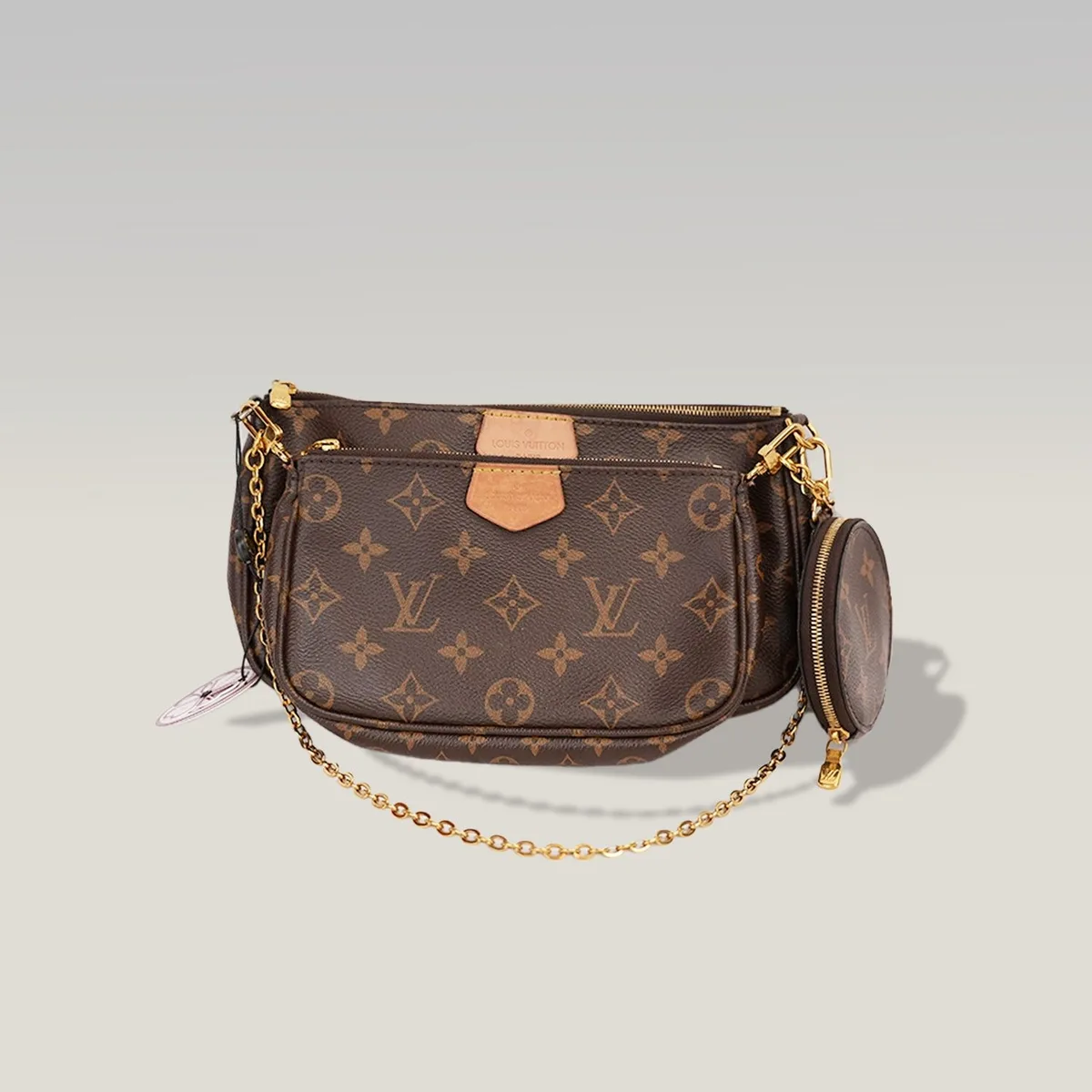 Louis Vuitton Multi Pochette Accessoires in Brown Monogram Coated Canvas
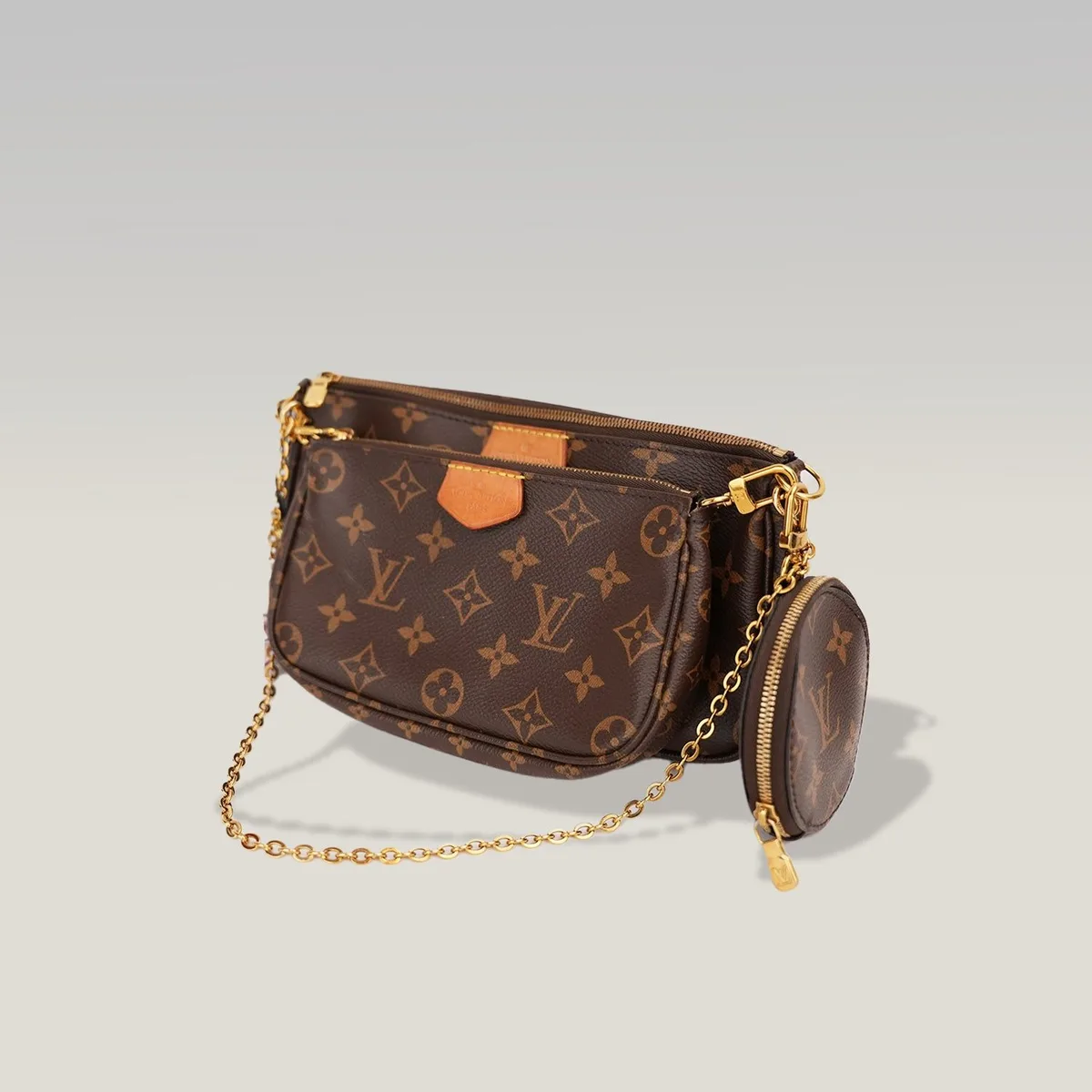 Louis Vuitton Multi Pochette Accessoires in Monogram Coated Canvas with Green Strap
 Louis Vuitton Bunny Bag in Pink Monogram Coated Canvas with Chain
Frequently asked questions
Does every Louis Vuitton bag have a date code?
No. Bags made before the early 1980s have none, and from about 2021 the stamp was replaced by an embedded microchip. Some straps and accessories also carry no code.
Can I look up a date code online to check a bag?
There is no public database, and a lookup would not help, because codes are shared by many bags and are easily copied. A code only tells you a workshop and a period.
Is a date code the same as a serial number?
No. A serial number identifies one item. A date code identifies a production period and workshop, and many bags share each code.
Why can't I find the date code on my bag?
It may be inside a pocket, on a tab tucked into a seam, faded by wear, or absent because the bag predates the system or was made after the switch to microchips. Use a torch at a low angle and check every interior tab.
Can a date code tell me the exact day a bag was made?
No. Depending on the era it gives the month or the week of production, never the day.
Read slowly, with good light, a Louis Vuitton date code tells you where and when a piece was made, and nothing more. When you are ready to put this into practice, browse our Louis Vuitton collection, where each pre-owned listing is photographed in detail, interior included.


