


If you want to know how to spot fake designer bags today, look at what is expensive to copy: stitching on curves and stress points, the weight and action of the hardware, the finish of the edges, the fit of the lining and the smell of the materials. Serial numbers, date codes, packaging and cards are reproduced routinely, so treat them as supporting detail, never as proof. And no single check, nor any combination of them, can prove a bag is real; when the stakes are high, ask a professional.
Much of the advice circulating online is a decade out of date, and following it produces false confidence, which is worse than none at all. This guide explains the checks that still tell you something, the ones that no longer do, and the point at which you should stop checking and pay for an expert opinion.
Why most advice on fake designer bags is out of date
Counterfeiting has changed. The crude copies with misspelt names and plastic hardware still exist, but the copies that cost buyers real money are made with care, from decent materials, by people who study the same reference photographs that buyers do. Anything a buyer can check from a listing, a counterfeiter can also see and reproduce.
That is the key to the whole subject. The checks that keep working are the ones that cost a counterfeiter real time or real money to fix on every single bag, and the ones that only show up in the hand rather than on a screen.
How to spot fake designer bags: the checks that still work
Stitching
Stitching remains one of the most informative details. Look at the number of stitches per inch and, more importantly, at their consistency. Fine work is dense, evenly spaced and holds the same angle along a whole seam, including where the seam curves around a corner. Weaker stitching loosens on curves, drifts in spacing over a long run and wanders off a straight line.
Know what the house in question actually does. Hermès is known for hand saddle stitching, where each stitch sits at a slight, regular slant, and some irregularity is a mark of the hand. Machine stitching on other houses should be very even. Judging one house by another's standard is a common beginner's mistake.
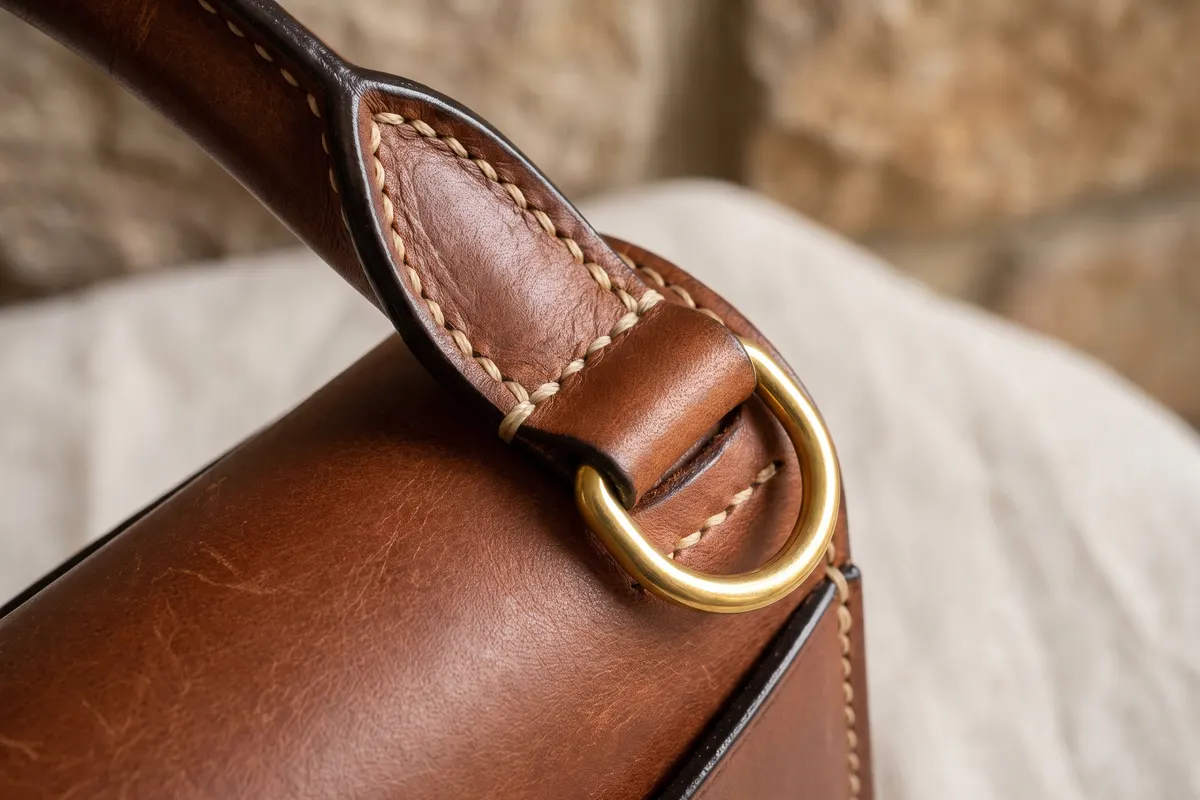
Look especially at where a strap or handle meets the body. That junction takes the load, so it is reinforced on a well-made bag, and reinforcement is hard to see in photographs, which is exactly why it gets skipped.
Hardware weight and action
Pick the bag up by its hardware. Well-made clasps, chains and feet are solid metal and feel heavier than they look. Lighter alloys and hollow plated parts are a warning sign, and the difference is obvious in the hand while invisible on a screen.
Then work the closure ten times. Good hardware operates with a consistent, slightly damped action. Poor hardware is either loose or gritty, and its feel changes as you repeat the movement. Look at engraving on clasps and zip pulls too: it should be crisp and evenly deep, not soft-edged or shallow.
Edges and edge paint
Cut leather edges on a good bag are sealed and finished in even layers, then smoothed, with no bubbling, no ridges and no thinning at the corners. It is slow handwork, and it is one of the places where corners get cut, literally. Run a fingertip along an edge: it should feel smooth and consistent from one end to the other.
Lining and interior construction
Inside, check that the lining is fitted rather than merely present, that it sits taut without puckering, and that pockets are placed where someone who thought about opening the bag would put them. Interior stamps should be pressed cleanly into the material rather than printed on top of it, with even depth across every letter.
Leather behaviour and grain
Natural grain is irregular. Togo, for example, has a soft, varied pebble, and lambskin shows small natural variations in its surface. A perfectly repeating pattern on a leather that should be natural suggests an imitation surface. The nuance matters, though: some leathers, such as Epsom or many grained calfskins, are embossed by design, so uniformity alone is not a verdict. Know what the leather is supposed to be before you judge it.
Symmetry and alignment
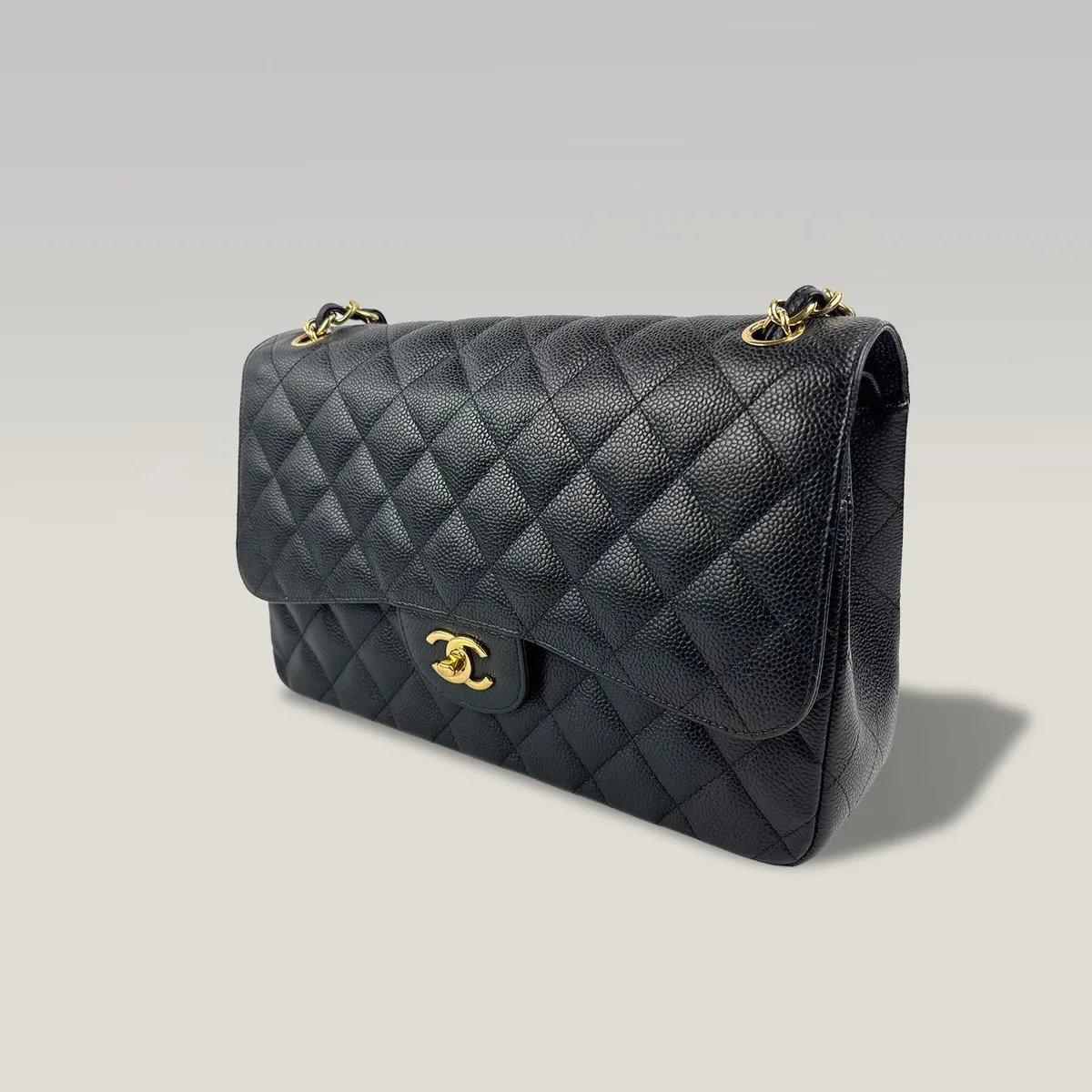
Alignment costs leather and time, so it is often sacrificed. On a quilted flap bag, see whether the diamond pattern lines up where panels meet, at the back pocket and across the flap. On a pre-owned Chanel Classic Flap Jumbo in black caviar leather, for instance, those meeting points are exactly the details to study in close-up photographs. On cannage stitching, such as that of the pre-owned Lady Dior medium in matte black cannage calfskin, look at how evenly the pattern runs over the curves and around the handles.
Smell and overall weight
Quality leather smells of leather. A strong chemical or plastic smell is a real warning sign, and one of the few that survives every advance in counterfeiting, because it comes from the materials themselves. Overall weight tells a similar story: good leather and solid hardware are heavier than most people expect.
Codes and stamps: what they can and cannot tell you
Every major house marks its bags in some way, and learning to read those marks is a useful part of designer bag authentication. The crucial point is what a code can tell you. It can show whether the format matches the era and origin a seller claims. A mismatch is a strong red flag. A match proves nothing, because formats are public knowledge and are copied.
- Louis Vuitton used date codes combining letters and numbers for many years, and more recent pieces use an embedded chip instead. Our guide to Louis Vuitton date codes explains how to read them by era.
- Hermès marks its bags with a blind stamp that indicates the year of production. Our Hermès date stamp year chart covers the letters and shapes used over time.
- Chanel used serial number stickers paired with a matching card for decades before changing its system. Our guide to Chanel serial numbers sets out the formats and the years they belong to.
- Gucci uses an interior tag with a style code. Our guide to Gucci serial numbers explains how to read it.
Use these guides to rule pieces out, never to rule them in. A Louis Vuitton collaboration piece such as the pre-owned Louis Vuitton x Takashi Murakami Speedy 30 in white Monogram Multicolore belongs to a specific period, so its markings should match that period. That consistency is worth checking; it is not a conclusion.
Checks that no longer prove anything
Packaging, dust bags, boxes, ribbons, cards, receipts and serial formats are all reproduced convincingly. Treat their presence as neutral rather than as evidence. Their absence is worth asking about, but their presence settles nothing.
The same goes for the most repeated tips online: the shape of a particular letter in a heat stamp, the colour of a dust bag, the number of stitches on one tab. These were useful once, and every counterfeiter now knows them. Anyone learning how to spot fake designer bags should start by unlearning them.
Real vs fake designer bag: buying pre-owned with care
Most people who worry about fake designer bags are buying pre-owned, and the seller often tells you as much as the bag does. Signals worth noticing:
- Photographs. A careful seller shows the details you need: stitching close-ups, hardware engraving, interior stamps, corners and edges. A listing built only on wide, flattering shots is not enough.
- Answers. Ask where the bag came from and how long the seller has had it. Clear, consistent answers are normal. Vague or shifting ones are not.
- Price. A price far below the market for that model and condition is the oldest warning there is, and it still works.
- Returns. A seller confident in a piece offers a sensible return window and accepts an independent inspection.
Our complete guide on how to buy a pre-owned designer bag goes through condition grading, questions to ask and what to check on arrival.
How to authenticate a designer bag: when to stop and pay someone
Knowing how to spot fake designer bags narrows the risk; it does not remove it. If two or more of your checks are ambiguous, stop. Professional designer bag authentication costs a small fraction of the price of a serious bag, and a specialist who handles many examples of one model sees things no checklist can capture. Even then, treat the result as an expert opinion rather than a guarantee: no service is infallible, and the best ones will say so.
A seller's reaction to the request is itself informative. A legitimate seller expects the question and welcomes it. Reluctance, pressure to decide quickly or a sudden price cut are reasons to walk away.
For exotic leathers, such as the scales on a pre-owned Hermès Birkin 25 in graphite grey shiny crocodile, a specialist opinion matters even more, because the value is high and the skins are subject to their own documentation rules when crossing borders. Our Sourcing and Authenticity page explains how we source our pieces and what we disclose about each one.
Shop the look
- Chanel Classic Flap Jumbo in Black Quilted Caviar Leather with Gold-Tone Hardware
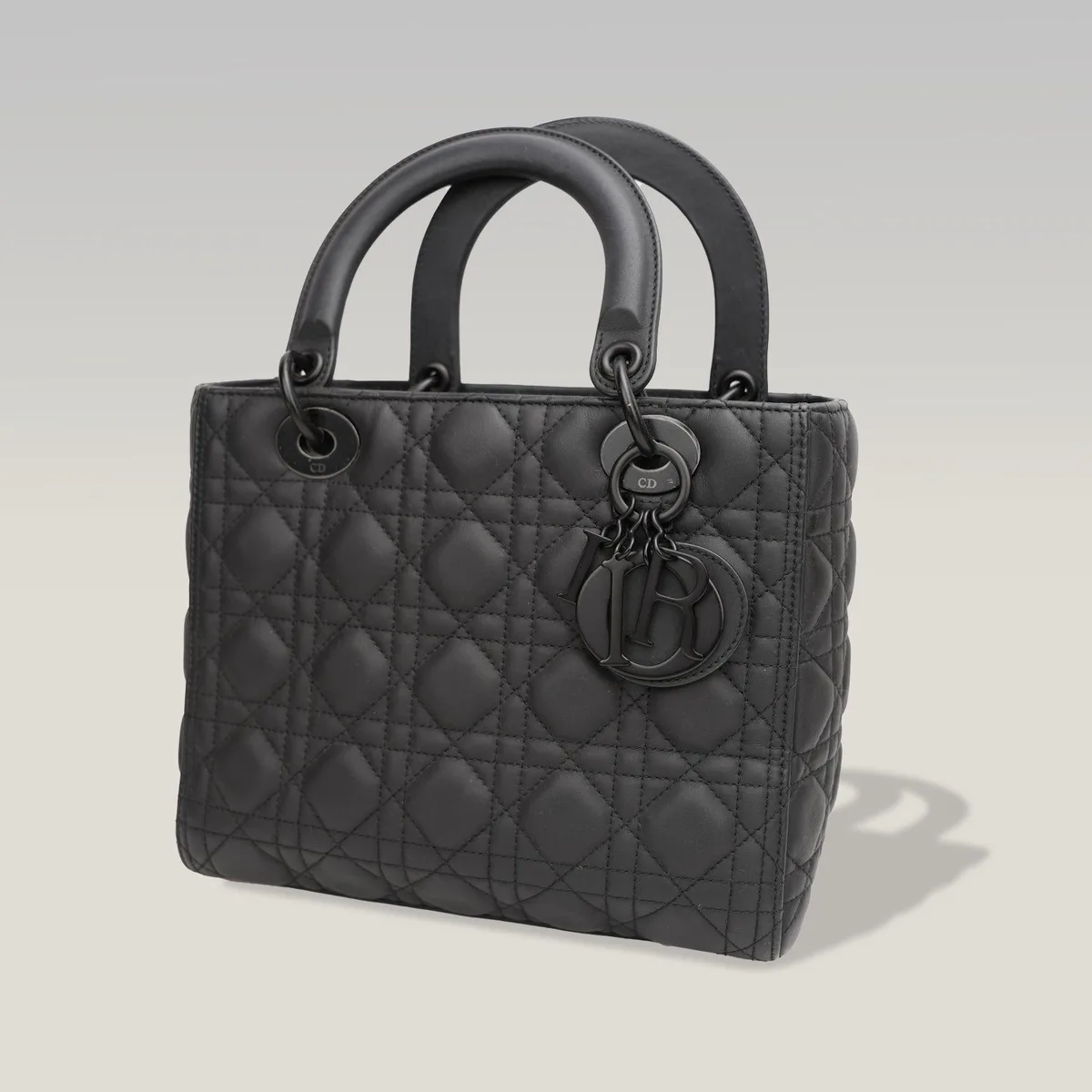 Dior Lady Dior Medium in Matte Black Cannage Calfskin with Shoulder Strap
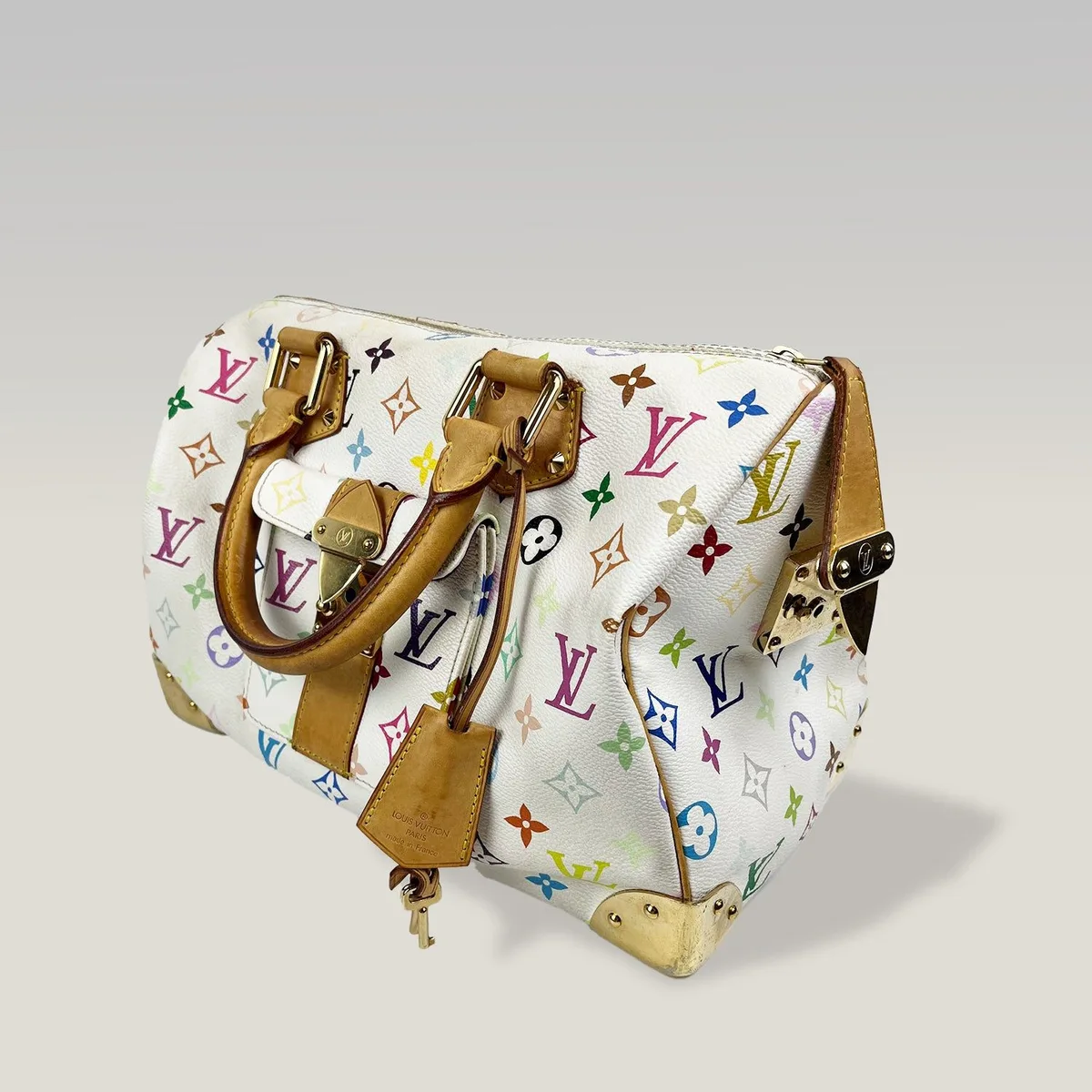 Louis Vuitton x Takashi Murakami Speedy 30 Monogram Multicolore in White
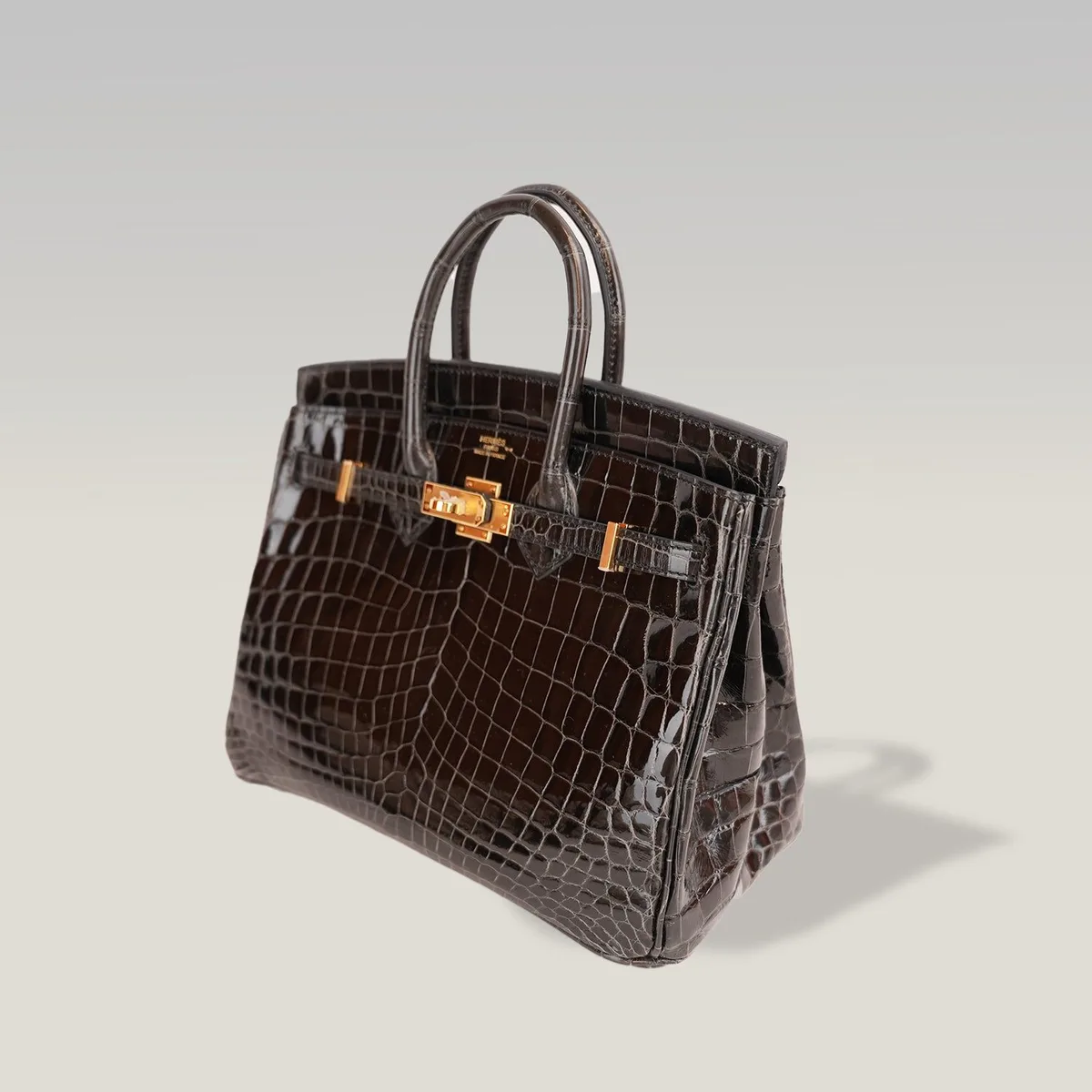 Hermès Birkin 25 Vintage in Graphite Grey Shiny Crocodile with Gold Hardware
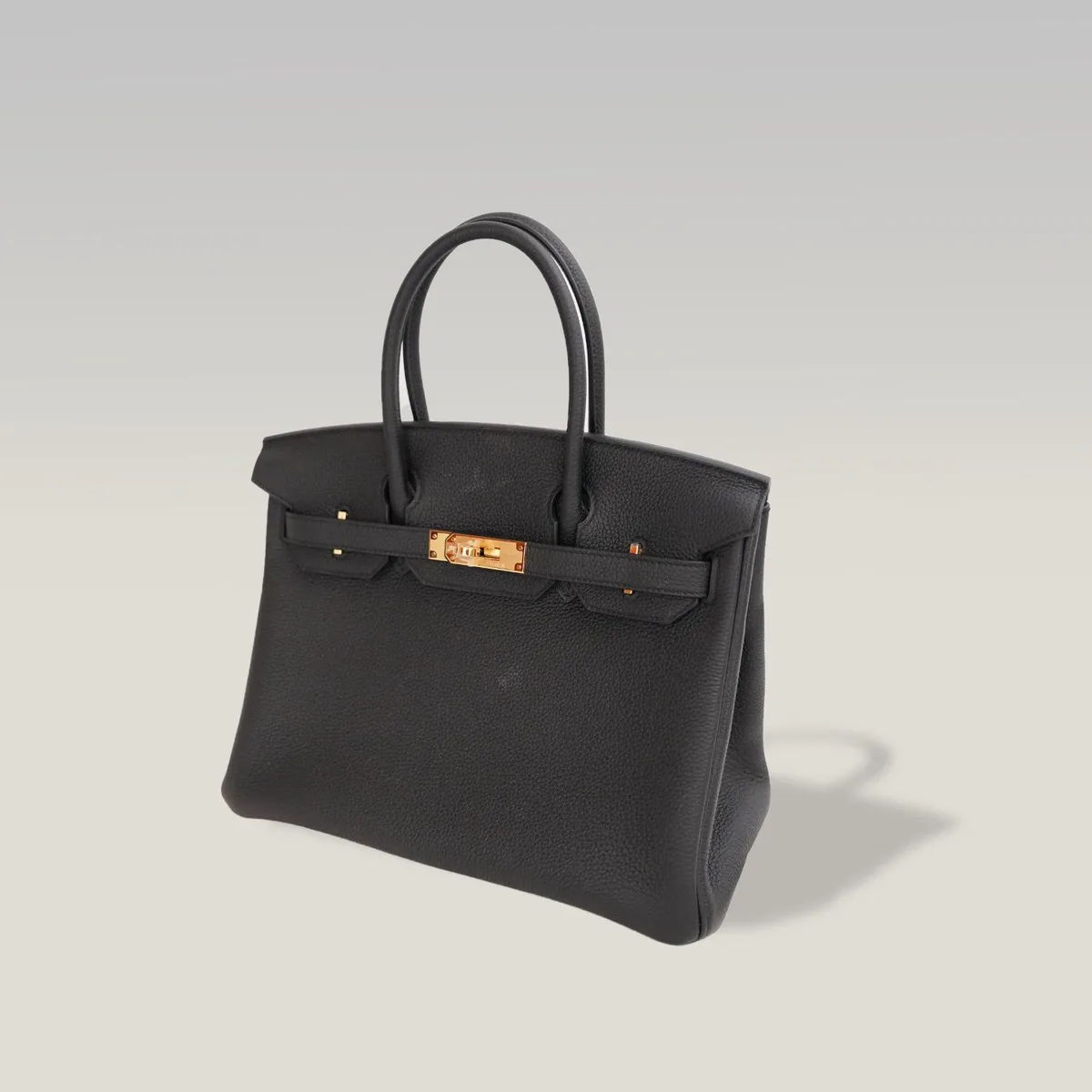 Hermès Birkin 30 in Noir Togo Leather with Gold Hardware
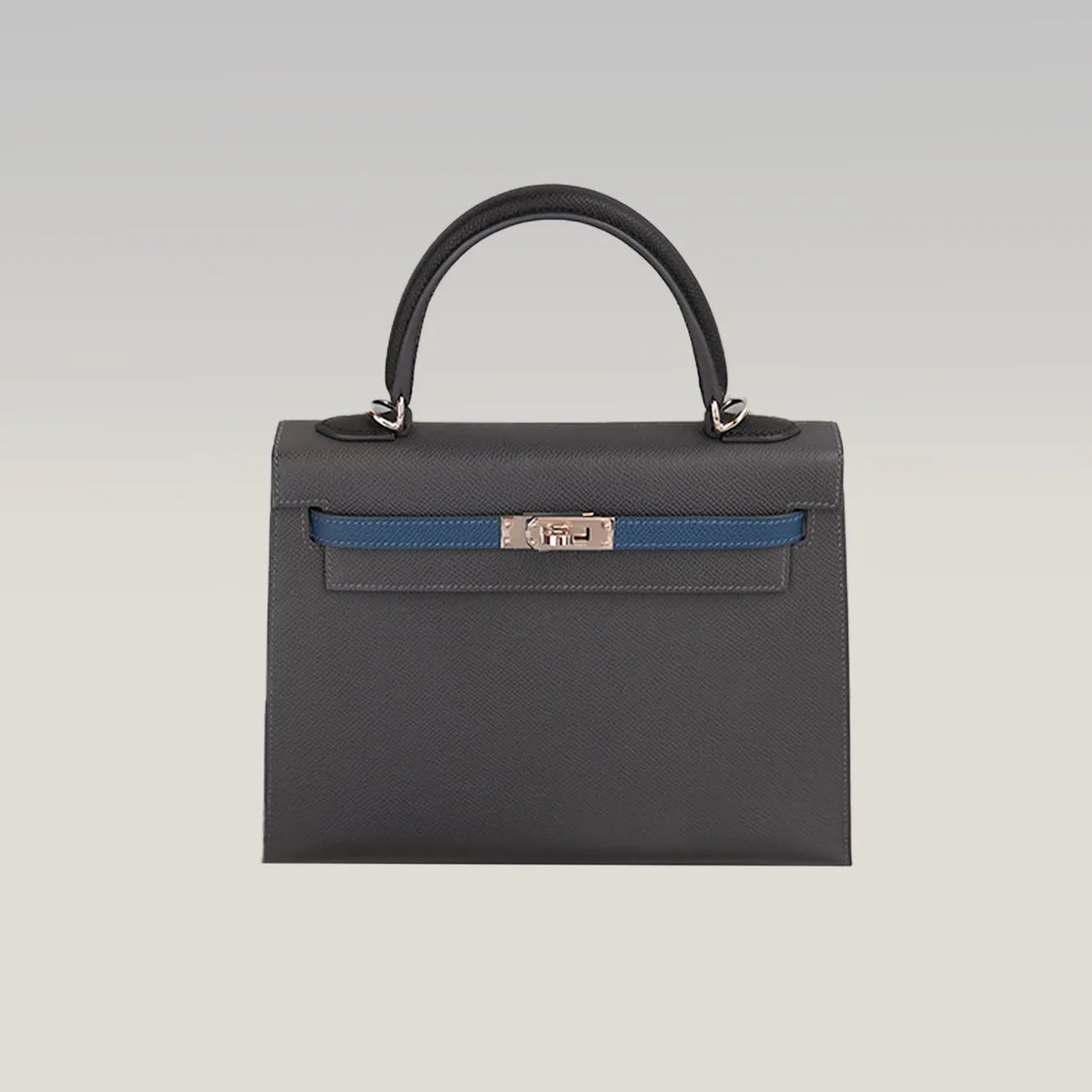 Hermès Kelly 25 Sellier in Smoke Grey and Blue Epsom Leather with Palladium Hardware
Frequently asked questions
How can you tell if a designer bag is fake?
Look at the details that are expensive to copy: even stitching that holds its line around curves, heavy solid hardware with a smooth action, smooth layered edge paint, a fitted lining, cleanly pressed stamps and the smell of real leather. Several weak signals together are a reason to stop and seek an expert opinion.
Does a serial number or date code prove a bag is real?
No. A code can show that the format matches the era a seller claims, and a mismatch is a red flag. But formats are widely known and are copied, so a correct-looking code proves nothing on its own.
Can fake designer bags come with dust bags, boxes and cards?
Yes. Packaging, cards and even receipts are reproduced. Treat them as neutral, and judge the bag itself.
What is the most reliable sign of a fake bag?
There is no single sign. Stitching consistency, hardware weight and edge finishing are among the most informative, because they cost real time and money to get right. The more of them that look wrong, the more confident you can be that something is amiss.
Are professional authentication services worth it?
For any serious purchase, yes. A specialist who sees many examples of one model will notice what a checklist cannot. Treat the result as an expert opinion, not an absolute guarantee.
Can you spot a fake from photographs alone?
Sometimes you can rule a bag out from photographs, but you can rarely rule one in. Weight, smell, hardware action and edge feel only show up in the hand, so ask for detailed close-ups and buy where returns are possible.
If you would rather browse pieces with clear photographs and condition notes, explore our vintage and pre-owned collection.


